
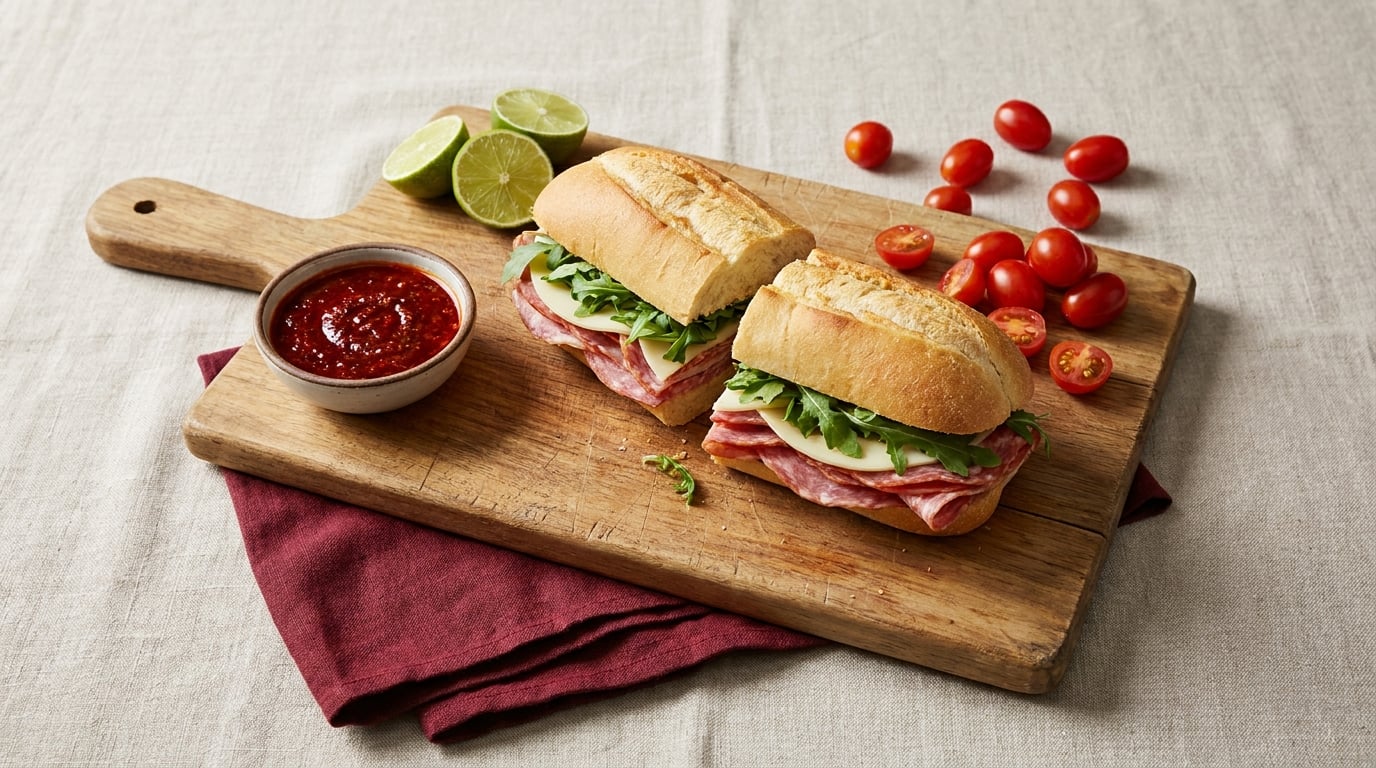
Most hot sauce lists rank by heat, which is exactly backwards for a sandwich. The best hot sauces for sandwiches and subs add a distinct note — vinegar tang, garlic, smoke, sweetness — while the heat stays in the background. Three bottles do the most work in a home kitchen: Crystal for seafood and roast beef, Frank’s RedHot for anything fried, and a thicker garlic-forward sauce such as Valentina or a green chile sauce for cold cuts and breakfast.
That is the whole rule. Match the heat to the weight of the filling, and pick a sauce body that suits the bread.
I keep three on the counter at all times and rotate based on what I am making. A thin vinegar sauce for a po’boy, a thicker one for a breakfast sandwich, and something sweet for fried chicken. Vinegar-based bottles like Crystal and Frank’s cut through fatty meat beautifully, but they also soak a soft roll fast, so timing matters more than people expect.
The ten below are ordered by usefulness for sandwich work, not by Scoville count. Several of them are mild. That is deliberate — for a sub, a sauce with flavor and little burn beats one that makes you sweat through the first bite.
Table of Contents
- Best Hot Sauces for Sandwiches and Subs at a Glance
- 1. Cholula Hot Sauce
- 2. Valentina Hot Sauce
- 3. Frank’s RedHot Original Cayenne Pepper Sauce
- 4. Crystal Hot Sauce
- 5. Louisiana Hot Sauce
- 6. Texas Pete Hot Sauce
- 7. Sriracha Hot Chili Sauce
- 8. Trader Joe’s Hot Sauce
- 9. Green Chile Hot Sauce
- 10. Hot Honey Habanero Sauce
- How to Choose a Hot Sauce for Sandwiches and Subs
- Frequently Asked Questions
- Final Take: Start With Your Sandwich Flavor
Best Hot Sauces for Sandwiches and Subs at a Glance
| Sauce | Flavor profile | Heat level | Best sandwiches and subs |
|---|---|---|---|
| Crystal | Bright peppery, fermented tang | Medium | Shrimp po’boy, roast beef, crab sandwich |
| Frank’s RedHot | Clean cayenne heat, thin body | Medium | Buffalo chicken sandwich, roast beef sub, grilled cheese |
| Cholula | Smoky, tangy, rounded spice | Mild to medium | Grilled chicken, turkey, breakfast sandwich |
| Valentina | Vinegar-forward, mild chile tang | Mild | Italian sub, cold cuts, tuna melt |
| Sriracha | Sweet, garlic-forward, thick | Medium | Turkey sub, chicken sandwich, tuna melt |
| Louisiana | Pepper and vinegar, bold | Hot | Po’boy, chopped beef barbecue sub, burger |
| Texas Pete | Sharp vinegar heat, fermented | Hot | Fried chicken sandwich, slaw-heavy barbecue sub |
| Trader Joe’s | Smoky, approachable, medium | Medium | Roast beef, grilled vegetable, melted cheese |
| Green chile sauce | Tangy, herbal, tomatillo notes | Mild to medium | Pork sandwich, carne asada sub, egg sandwich |
| Hot honey habanero | Sweet first, clean burn after | Medium to hot | Fried chicken, turkey, bologna, ham |
Read the heat column as a starting point rather than a promise. Labels are wildly inconsistent, and a fermented bottle with a heavy mash often tastes hotter than its rating suggests. Drip, taste, adjust.
1. Cholula Hot Sauce
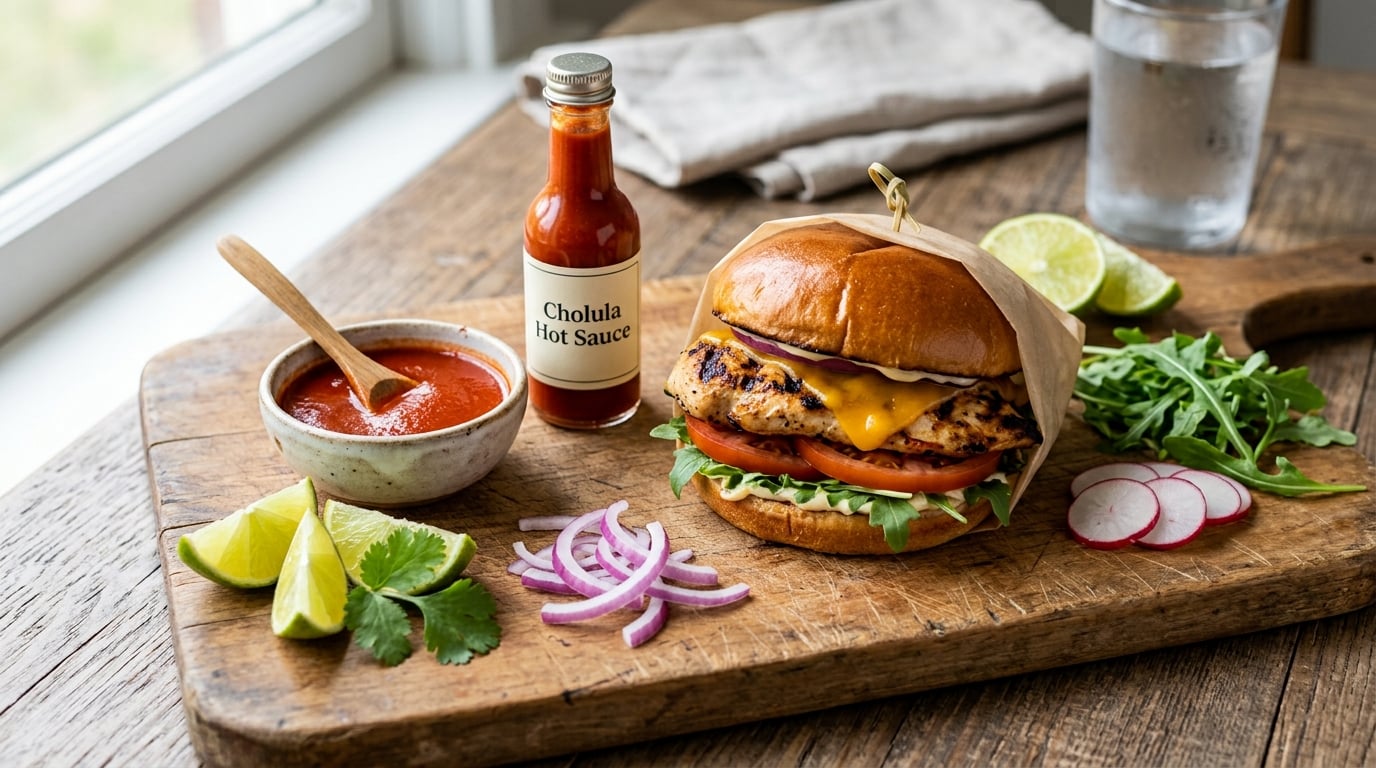
Cholula is the most forgiving bottle in my kitchen for reason. The flavor is rounded rather than sharp — a smoky wood note, moderate vinegar, and a chile warmth that arrives late instead of shouting through the first bite.
It works best on sandwiches where the filling is mild and a little dry, because it adds moisture and acidity without adding aggressive heat. Grilled chicken with sliced tomato and a soft roll is the classic application. A turkey and provolone sub also absorbs it well, and a breakfast sandwich with egg and cheese gets a pleasant lift from the wood notes.
Use about a teaspoon per sandwich and drizzle it on after the filling goes in, so it sits on the surface rather than soaking straight through. Cholula is also the sauce I hand to people who say they do not like hot sauce, because it delivers flavor without the burn.
2. Valentina Hot Sauce
Valentina is the coldest-cut specialist in this list. It is a thin, vinegar-forward sauce with a mild chile tang and no real heat, which sounds like a weakness until you build an Italian sub with salami, ham, and provolone in thin slices.
Those cold cuts are fatty and mildly cured, and the vinegar in Valentina cuts them without cooking the flavor out. It also works on a roast beef and provolone sub, and a little stirred into mayonnaise makes a surprisingly good spread for a tuna melt.
The tradeoff is sogginess. Valentina is thin enough that it will turn a soft roll into a disassembled mess if you drizzle it early. Assemble the sub, then add the sauce at the table, or spread it on the top bun just before serving.
3. Frank’s RedHot Original Cayenne Pepper Sauce
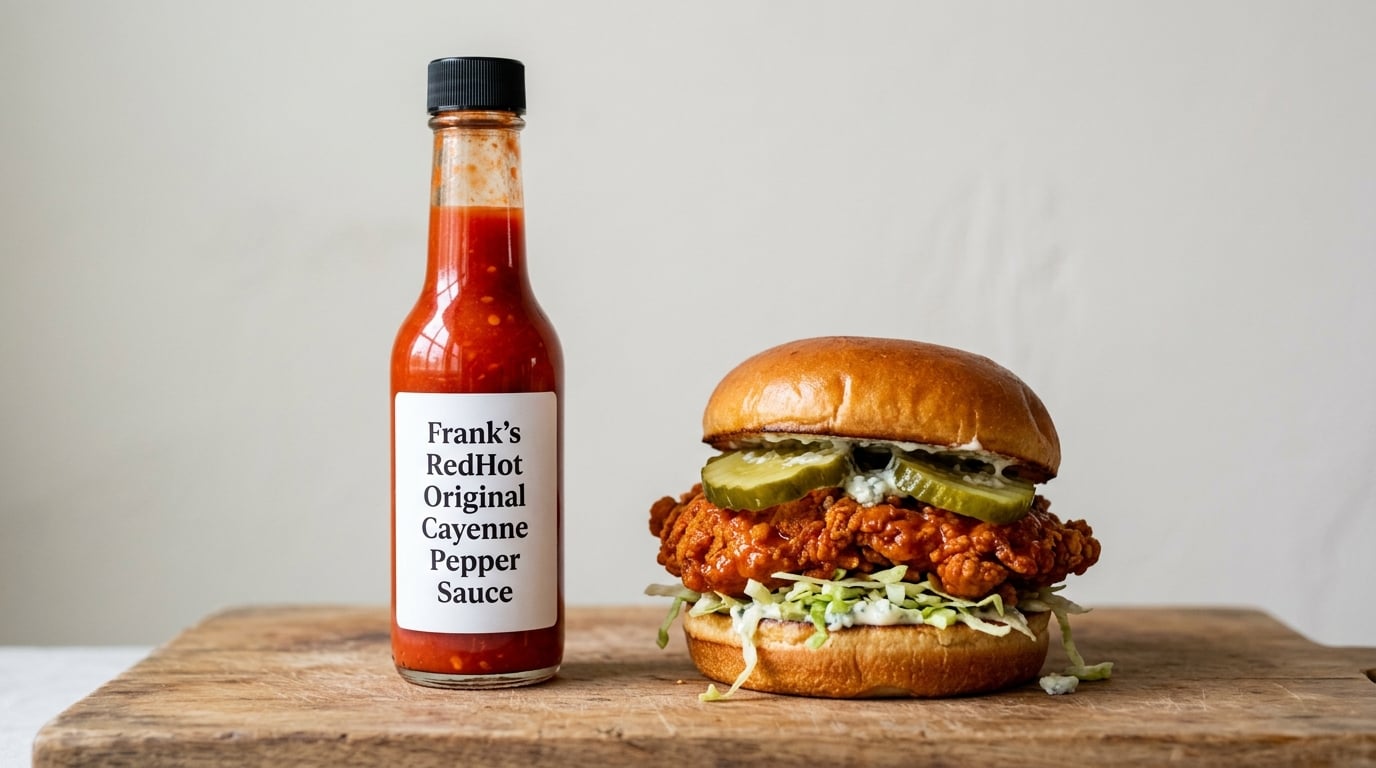
Frank’s RedHot is the everyday workhorse. The flavor is clean cayenne with a thin body and no smoke, no fruit, no fermentation depth — the sauce stays out of the way and delivers consistent heat every time.
For sandwiches, that predictability is the point. Toss fried chicken in Frank’s before it goes on a bun and you have a buffalo chicken sandwich that tastes the same as last week. It is equally good on a roast beef sub, drizzled over a grilled cheese right after it leaves the griddle, or on a pile of fries pressed into the bottom of the sandwich.
Start with a teaspoon and a half for a large sub. Frank’s heat arrives fast but does not linger as long as a fermented sauce, so a slightly larger amount is easier to handle than it would be with Texas Pete.
4. Crystal Hot Sauce
Crystal is the best all-rounder for seafood sandwiches and the sauce I reach for when a sub needs acid more than it needs heat. It is made from aged red cayenne pepper mash and distilled vinegar, and the aging gives it a fermented, rounded aroma that plain vinegar lacks.
That fermented note is what makes it shine on a shrimp po’boy or a crab sandwich. The tang lifts briny shellfish off the bread, and the pepper flavor reads as a seasoning rather than a burn. It is equally at home on a roast beef and horseradish sub, where the horseradish already has bite and you want support, not competition.
Texture runs thicker than Frank’s, which helps a lot on a roll. It is not as hot as it looks, so Crystal is a good bottle for a heat-averse eater who still wants a real pepper flavor. This is the one I would hand to someone who says vinegar-forward sauces usually make their bread fall apart.
5. Louisiana Hot Sauce
Louisiana Brand, the original hot sauce, is a pepper-and-vinegar sauce with genuine bite. The flavor sits close to a classic cayenne hot sauce but with a heavier mash, so it coats more than it soaks.
On a po’boy or a chopped beef barbecue sub, it delivers the sharp acid that offsets the richness of the meat. It also does well on a burger, where the sauce spreads over the patty and picks up the char. If you are building a jambalaya-style sub with sausage and rice in the mix, this is the bottle that keeps tasting like a separate ingredient rather than melting into everything.
It runs hotter than Crystal and Frank’s, so measure it. Half a teaspoon on a first sandwich, then more if it needs it. Anything past a tablespoon on a sub roll and you will be drinking water between bites.
6. Texas Pete Hot Sauce
Texas Pete is a fermented vinegar sauce, and fermentation gives it the depth that plain vinegar hot sauces lack. The aroma has a fermented, almost savory note, and the heat is sharp rather than floral.
That profile pairs well with slaw. A fried chicken sandwich or a barbecue sub topped with cool, crunchy slaw is exactly the balance Texas Pete is built for, because the heat stays sharp and the slaw cools it between bites. It also works on a seafood sandwich and on spicy chopped beef.
The heat builds faster than most people expect, so start smaller than you think. A quarter teaspoon per sandwich section is plenty on a first pass. The bottles are small and the flavor is strong, so a bottle lasts a long time in a home kitchen.
7. Sriracha Hot Chili Sauce
Sriracha is the opposite of the thin vinegar sauces: thick, opaque, sweet, and heavy on garlic. The body is the selling point for sandwich work, because it clings to turkey and chicken instead of running down the roll.
On a turkey sub it adds garlic and a little sugar that plays well with the mild flavor of the meat. A Vietnamese-style sandwich with pickled carrot and cilantro takes it well. It also makes a good fry sauce for a chicken sandwich, and stirred into mayonnaise it makes a fast sriracha aioli good enough to sell to people who think they do not like heat.
Since it is sweet, a light hand goes a long way. Half a teaspoon on a turkey sub is usually plenty. Sriracha also has a long refrigerator life, which makes it a good choice if you buy one bottle and use it slowly over a few months.
8. Trader Joe’s Hot Sauce
Trader Joe’s own hot sauce is an approachable, smoky red sauce with a medium heat and a slightly sweet finish. Nothing about it is extreme, and that is exactly why it is useful as an everyday sub sauce.
It works well on roast beef, where the smoke note echoes the roasted edge of the meat. On a grilled vegetable sandwich, it adds enough acid to keep zucchini and eggplant from tasting flat. Melted cheese sandwiches get a mild sweetness that plays nicely with toasted bread, and it is fine on a plain chicken sub if you want a straightforward, non-fancy drizzle.
The main limitation is that the flavor is a little generic compared with Crystal or El Yucateco, and shoppers do not always find it consistently. If it is on the shelf, it is a reliable second bottle next to something sharper.
9. Green Chile Hot Sauce
Green chile sauces, whether tomatillo-based or made from jalapeños and serranos, are tangy, herbal, and usually mild. The flavor leans grassy and bright rather than hot, which is why they are so effective on sandwiches with fatty meat.
A pulled pork or carnitas sandwich is the ideal pairing, since the acidity cuts the fat and the herbal note does not fight the meat. A carne asada sub with cilantro and onion works the same way. On a breakfast sandwich with eggs and avocado, a green chile sauce adds a fresh note that egg and cheese sandwiches usually lack.
The texture tends to be thin, so drizzle lightly and add it late in the assembly. This is the category worth exploring first if you want flavor on a sandwich without meaningful burn.
10. Hot Honey Habanero Sauce
Hot honey with habanero leads with sweetness and finishes with a clean, rising burn. The honey makes it cling to bread instead of cutting through it, so it will not turn a roll soggy the way a straight vinegar sauce will.
Fried chicken sandwiches are the best use. It also works on turkey, ham, and bologna, where a thin slice of cured meat needs a sweet and spicy counterweight, and it turns a simple grilled cheese into something worth eating on its own.
Serve it generously on the side as a dipping sauce for a crispy chicken sub, which is how it gets the most play. Straight on a sandwich, start with a small squeeze and add more at the table.
How to Choose a Hot Sauce for Sandwiches and Subs
The best hot sauces for sandwiches and subs are not the hottest ones on the shelf. Pick the body, then pick the heat, then decide how you are applying it.
Pick the body first: vinegar or emulsified
Vinegar-based sauces — Crystal, Frank’s, Louisiana, Texas Pete, Valentina — cut through fat and cure, which is what you want on roast beef, cold cuts, and po’boys. They are thin, so they soak bread quickly, and a high vinegar load is the main reason a sub falls apart.
Emulsified or thicker sauces — sriracha, hot honey, creamy chili sauces, green chile blends — stay put and add sweetness, garlic, or herbal notes instead of pure acid. These are better on soft rolls, on breakfast sandwiches, and anywhere a vinegar sauce would overwhelm rather than complement.
Match heat to the weight of the filling
A thin slice of turkey or bologna has almost no flavor intensity of its own, so it needs either heat or a strong flavor note to register. A roast beef sub or a chopped beef barbecue sandwich can carry more vinegar tang and more heat without losing balance.
A useful rule is to start at a quarter teaspoon per sandwich section and double it after tasting. Heat ratings on labels are inconsistent, and the only reliable test is the one you run on your own sandwich.
Drizzle, spread, or layer it inside
Drizzling works for thin, vinegar-based sauces and fried fillings. Drizzle onto the filling as late as possible so the sauce sits on the surface.
Mixing is the most forgiving method. Stir any hot sauce into mayonnaise for a spread or aioli, and the fat tames the burn while the flavor carries through. Sriracha mayo, spicy mayo, and a mustard-honey blend all work on deli sandwiches this way.
Layering inside the sub is the technique regulars describe enjoying most, and it solves the sogginess problem completely. Put the sauce on the bottom bun’s cut face, add the filling, and close. The bread absorbs flavor without falling apart, and the heat stays trapped in the middle with the meat.
Read the label for the flavor you are missing
Look at the base first: a long ingredient list ending in vinegar and salt usually means a clean, vinegar-forward sauce. If you want garlic, look for roasted or aged garlic in the list. For smoke, look for chipotle, smoked paprika, or a smoked pepper base.
Watch for added sugar in sweet sauces, and for gums or thickeners that leave a film on bread. Fish or anchovies appear in some fermented styles, which matters if anyone at the table avoids them.
Frequently Asked Questions
What is the best sauce to put on a sandwich?
For most sandwiches, the best hot sauce is a vinegar-based one such as Crystal or Frank’s RedHot, because the acid cuts through fatty meat and cured flavors without drowning them. Thicker sauces like sriracha or hot honey work better on soft rolls, where a thin vinegar sauce would soak the bread. Match the heat to the filling: mild for turkey and egg sandwiches, medium for roast beef and cold cuts.
What is the best hot sauce for a breakfast sandwich?
Green chile sauces are the strongest pick for egg and breakfast sandwiches, because their herbal tang cuts through butter and cheese without adding meaningful burn. A thick garlic-forward sauce such as sriracha also works well on a bacon, egg and cheese. Sweet heat is another option: a little hot honey on an egg and avocado sandwich adds flavor without the sharpness of a straight vinegar sauce.
Which hot sauce works best for cold cuts and Italian subs?
A mild vinegar-based sauce is the safest choice for Italian subs, since salami, ham, and provolone already carry salt and fat. Valentina is a good fit for its light tang, and Crystal adds a fermented depth that works on a roast beef and provolone sub. Go light with any of them and add the sauce at the table, because thin sauces soak a soft roll quickly.
How much hot sauce should I put on a sub?
Start with about one teaspoon per sandwich section and taste before adding more. A quarter teaspoon per section is a better starting point for fermented or high-heat sauces such as Texas Pete, while thin sauces like Frank’s tolerate a slightly larger amount. Adding sauce in two passes rather than one at assembly gives you control over how much bread it soaks.
Does hot sauce go on a sandwich before or after grilling?
Add a thin, vinegar-based sauce before grilling so it cooks into the bread and the filling, which suits a grilled cheese or a pressed sub. Add thicker or sweet sauces after cooking, since honey and sugar scorch quickly on a griddle and emulsified sauces break down under heat. If you want a smoky note, add a chipotle-based sauce after grilling and let it sit for a minute.
Why does my sub get soggy when I add hot sauce?
Thin vinegar-based sauces release liquid into the bread as soon as they land, and a soft sub roll absorbs it within a minute or two. Layer the sauce on the cut face of the bottom bun and close the sandwich immediately, or mix the sauce into mayonnaise to emulsify it. Adding the sauce at the table, after the sandwich is cut, also keeps the bread dry.
Final Take: Start With Your Sandwich Flavor
Pick the sauce that matches the filling first, then adjust the heat. Seafood and roast beef want Crystal’s fermented tang. Anything fried wants Frank’s. Cold cuts want something mild like Valentina. Breakfast sandwiches want a green chile or garlic-forward sauce. Fried chicken takes a sweet heat like hot honey.
Start with a quarter teaspoon, taste, and add from there. That is the fastest way to find the best hot sauces for sandwiches and subs for your own kitchen, and it takes less time than reading any list.