
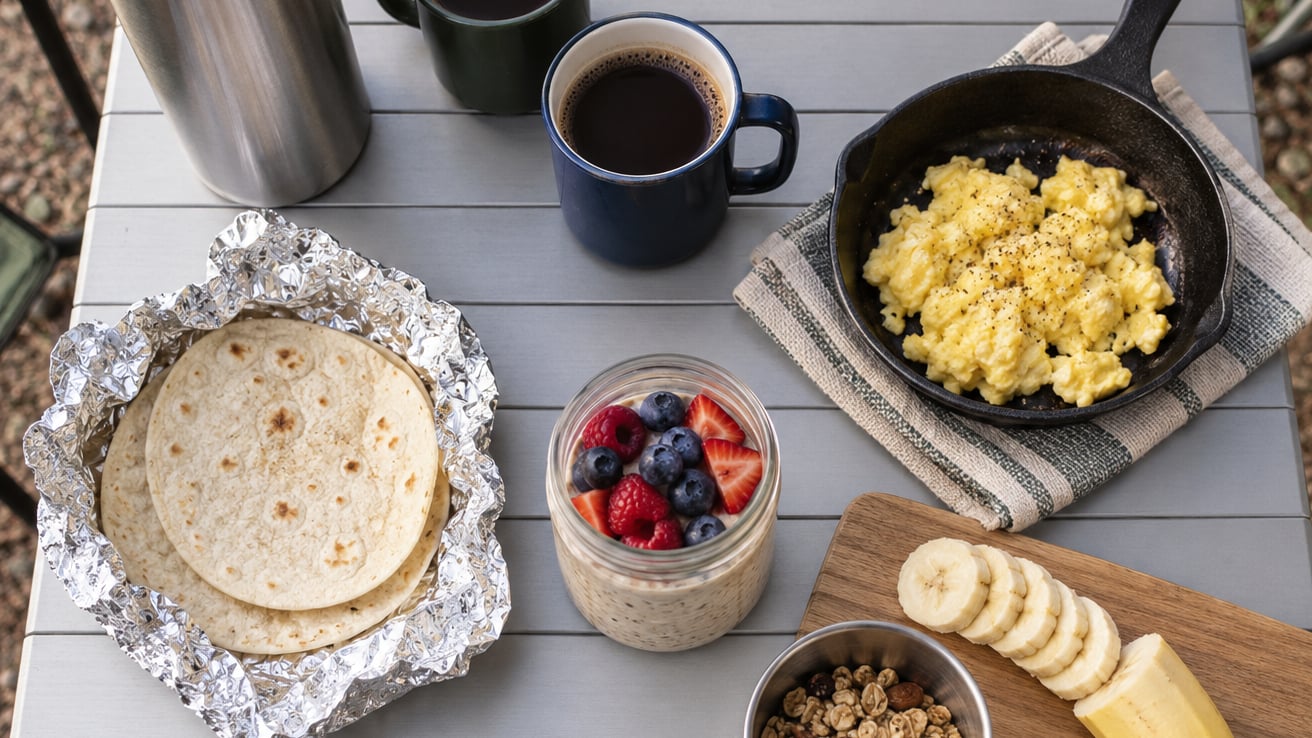
Camping breakfast ideas fall into four buckets: eat-it-cold options, meals you assemble at home before you leave, skillet food cooked on a camp stove, and foil packets cooked on hot coals. Pick one from each bucket and your mornings get easier fast, because the slow mornings are the ones you actually want.
I cook camp breakfasts for a family of four, and the test I use is simple: can it be made while half-awake, does it need a sink full of dishes afterward, and will a picky six-year-old accept it? Everything below passes or fails on that, with cook times and packing notes so you can plan the cooler space before you pack.
Most of these recipes are the sort of handheld breakfast that survives a bumpy road and a muddy table, and the whole list was refreshed for October 2026 with current USDA food-safety guidance on eggs and storage.
Table of Contents
- Camping Breakfast Ideas at a Glance
- 1. Make-Ahead Breakfast Burritos
- 2. Overnight Oats with Berries
- 3. Campfire Breakfast Hash Browns
- 4. Peanut Butter and Banana Breakfast Wraps
- 5. Breakfast Pizza on a Camp Stove
- 6. Yogurt Parfait Cups
- 7. Campfire Cinnamon French Toast
- 8. Trail Granola and Yogurt Cups
- 9. Breakfast Quesadillas
- 10. Nut-Free Banana Energy Bites
- 11. Cold Breakfast Bento Box
- 12. Camp Stove Steel-Cut Oatmeal
- How to Choose the Right Camping Breakfast for Your Trip
- How to Keep Camping Breakfasts Fresh and Safe
- Frequently Asked Questions
- What is the easiest camping breakfast to make ahead?
- What can I eat for breakfast without a refrigerator?
- How do you keep breakfast food cold while camping?
- What camping breakfast can be made without a stove?
- How long can prepared camping breakfasts stay in a cooler?
- What should I cook first at a campsite in the morning?
- Conclusion
Camping Breakfast Ideas at a Glance
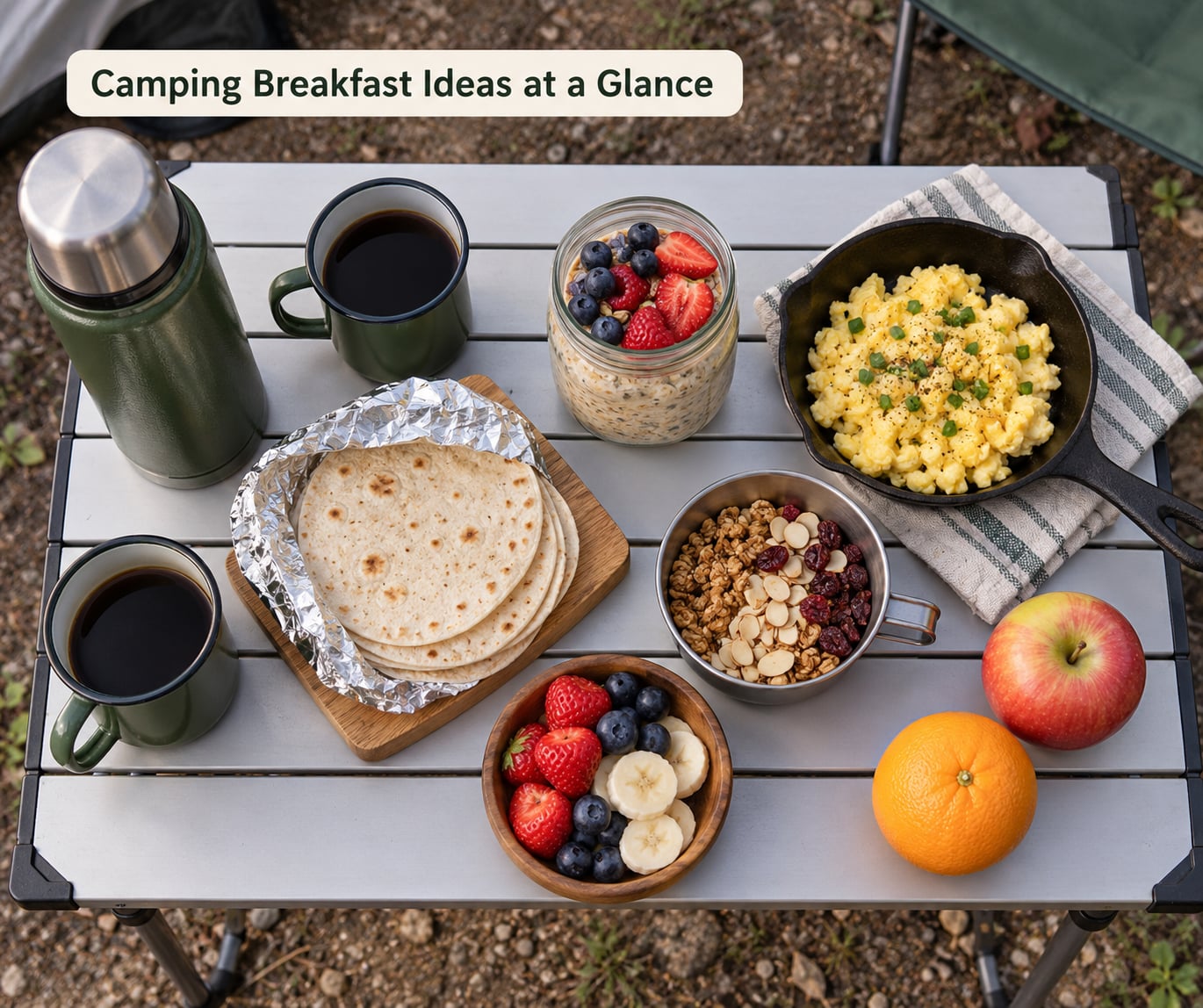
Scan this table first. The columns that decide most mornings are cooking method and cleanup, because the taste of a breakfast matters less than whether you want to wash a pan at 6:30 in the morning.
| Breakfast | Cooking method | Packing difficulty | Best campsite | Prep ahead? |
|---|---|---|---|---|
| Breakfast burritos | Camp stove or skillet, 8 min | Easy, freeze ahead | Car or RV campground | Yes, up to 3 months frozen |
| Overnight oats with berries | None, eat cold | Easy, jar with lid | Anywhere, including backpacking | Yes, made the night before |
| Hash browns | Skillet on a camp stove, 12 min | Easy, grate at home | Campground with a stove | Partly, shred potatoes at home |
| Peanut butter banana wraps | None, eat cold | Easy, wrap in foil | Anywhere | Yes, roll the night before |
| Breakfast pizza | Camp stove or Dutch oven, 7 min | Moderate, toppings in bags | Campground with two burners | Yes, sauce and toppings prepped |
| Yogurt parfait cups | None, eat cold | Easy, wide-mouth jars | Anywhere with cooler space | Yes, layered at home |
| Cinnamon French toast | Skillet over a fire, 10 min | Moderate, soak at home | Fire-permitted campsite | Yes, soak overnight |
| Granola and yogurt cups | None, assemble cold | Easy, dry mix in bags | Backpacking and group sites | Yes, portioned at home |
| Breakfast quesadillas | Skillet, 6 min | Easy, pre-fill at home | Campground with a stove | Yes, fill and chill |
| Banana energy bites | None, eat cold | Easy, freezer bag | Anywhere, no cold storage | Yes, freeze weeks ahead |
| Cold bento box | None, eat cold | Moderate, needs cooler space | Car camping with a cooler | Yes, packed night before |
| Steel-cut oatmeal | Pot on a camp stove, 15 min | Easy, measure at home | Any campground with a burner | Yes, soak to cut cook time |
1. Make-Ahead Breakfast Burritos
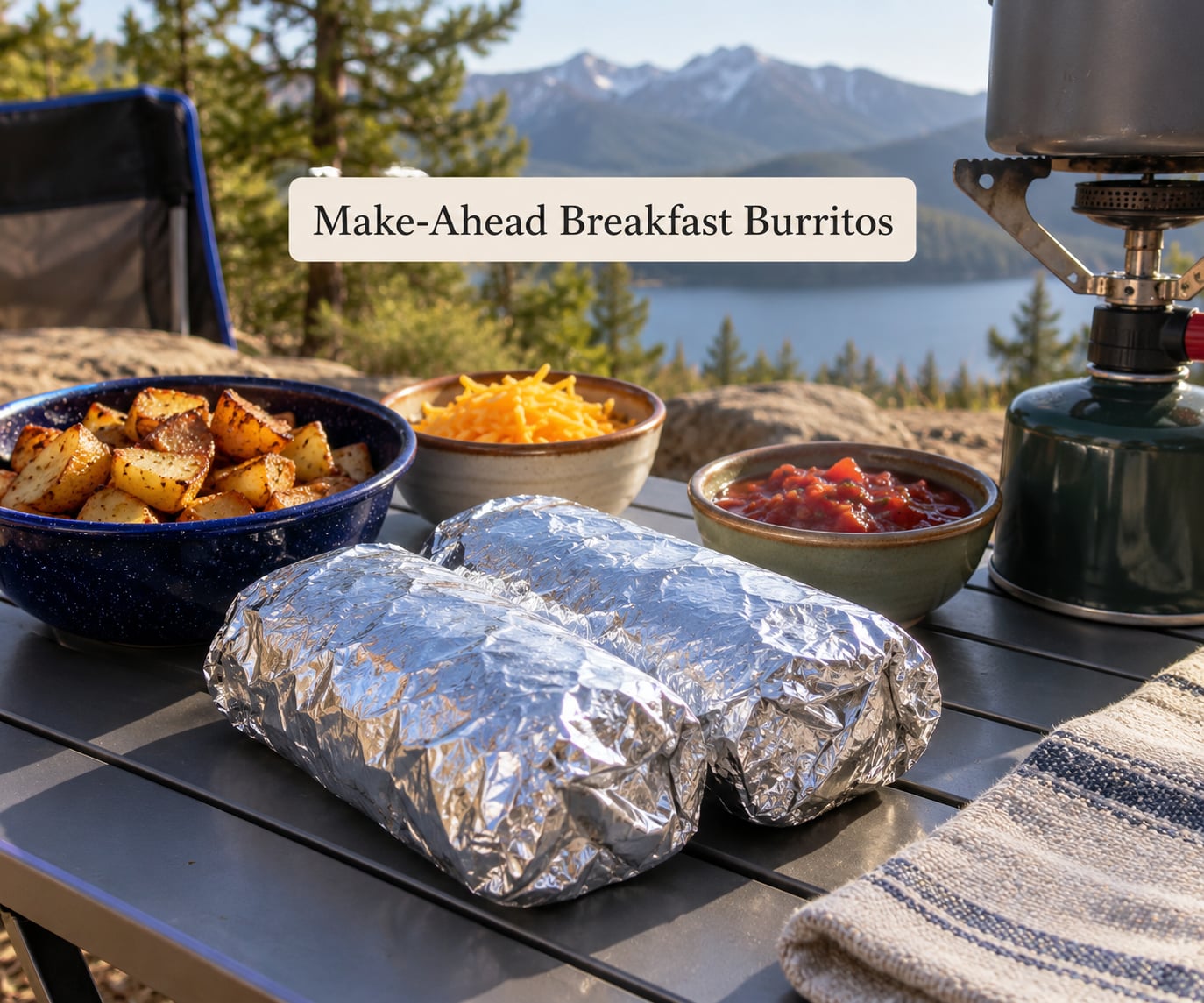
Make-ahead breakfast burritos are the single most reliable camp breakfast because the cooking happens at home and the campsite step is just heat. Cook a batch of scrambled eggs with pre-cooked potatoes and shredded cheese, spoon salsa into a large tortilla, roll it tight, and you have a breakfast that survives a fridge day before the trip and a freezer month before it.
Wrap each burrito in parchment first, then foil. That double layer keeps the tortilla from going soggy and stops cheese from sticking to the paper.
Assembly goes in this order for the best result:
- Warm a tortilla briefly so it rolls without tearing.
- Spread two tablespoons of scrambled egg mixture down the center third.
- Add a layer of cooked potatoes or black beans, then a pinch of cheese.
- Roll snugly, wrap in parchment, then foil.
- Chill overnight, then freeze the burritos standing up in a single layer before transferring them to a bag so they do not stick together.
At camp, put the foil-wrapped burrito in a dry skillet over a camp stove for about four minutes a side, or rest it on a hot skillet for a crisp tortilla. Skip the foil and cook it directly for a better crust.
Storage matters more than most people expect. Cooked egg burritos stay refrigerated for three to four days, and frozen they hold three months or longer. Keep them at or below 40°F in the cooler and reheat to 165°F before eating, which takes about three minutes in a skillet.
2. Overnight Oats with Berries
Overnight oats need zero cooking, which makes them the answer for backpacking and for mornings when the stove will not light. Stir equal parts rolled oats and milk in a jar, add chia seeds, a spoonful of honey or maple syrup, and a layer of chopped fruit, then screw the lid on.
The jar goes straight into the cooler overnight. By morning the oats have softened into something closer to pudding, and there is one container to wash instead of a pot and a burner.
Use a wide-mouth jar if you can. Narrow jars are fine for storage but frustrating when you are scraping sticky oats out with a spoon at dawn.
A practical note on liquid: dairy needs a real cooler, not a campground picnic table. If your trip has no reliable cold storage, use a shelf-stable fortified plant milk, add the chia seeds before you leave for extra thickness, and skip fresh berries in favor of dried ones that will not spoil.
3. Campfire Breakfast Hash Browns
Hash browns are the fastest hot breakfast you can make on a camp stove, and they are the dish most children will eat before 8 a.m. Shred two russet potatoes at home, rinse off the starch under a tap or with a splash of water, and pack the dry shreds in a freezer bag so nothing browns on the way.
At camp, heat an inch of oil in a cast-iron skillet, press the shreds into an even layer, and leave them alone for four minutes. Resist the urge to flip early. A single flip at the halfway mark gives you two crisp sides in about twelve minutes total.
Salt them as soon as they leave the pan. Leftover hash browns can be refrigerated up to four days and reheated in a dry skillet until steaming.
4. Peanut Butter and Banana Breakfast Wraps
A peanut butter and banana wrap is the best no-cook breakfast for a hot morning, because it needs neither flame nor cooler. Spread peanut butter across a tortilla, lay a whole peeled banana on top, and roll it like a burrito.
The banana is the trick. Keeping it whole rather than sliced means nothing leaks out of the wrap and the seam stays closed through a drive down a washboard road.
For more staying power, add a spoon of granola butter or a few spoonfuls of dry oats along one edge before rolling. If you are packing yogurt or cream cheese in there too, it needs cooler space, and that changes the equation.
5. Breakfast Pizza on a Camp Stove
Breakfast pizza on a camp stove is the most fun option for a group, and the one that forgives the most improvisation. Use a naan-style flatbread, a split English muffin, or a small tortilla, and put the sauce on first.
The order matters: sauce, then cheese, then toppings. Cheese first gives you a barrier that keeps the bread from going soggy under wet toppings like tomato or fresh pineapple.
Pre-cook any meat at home. Sausage, ham and bacon all need to be fully cooked before they go on, and doing that in a home kitchen saves you stove time and one more pan to wash at camp.
A single cast-iron griddle or a foil pan over two burners handles four personal-size pizzas at once. Lid the pan loosely if you are cooking over a campfire, and keep the coals pushed to one side so the bottom crisps before the top catches.
6. Yogurt Parfait Cups
Yogurt parfait cups take five minutes to assemble the night before and need no heat in the morning. The fix for the soggy granola problem is to keep the layers separate until it is time to eat.
Layer it this way: yogurt first, then fruit, then granola in a separate small bag or on top under a lid. Most of the damage comes from granola sitting on wet fruit all night.
Wide-mouth glass jars beat narrow ones again, because you can see the layers and eat straight down the glass. Keep them in the coldest part of the cooler and eat them within two days for the best texture.
7. Campfire Cinnamon French Toast
Campfire cinnamon French toast is a skillet breakfast for a campsite where a fire is allowed, and it does more for a cold morning than almost anything else on this list. Thick slices of day-old bread soak up egg and cinnamon better than fresh bread, which turns watery in the pan.
Whisk three eggs with a splash of milk, a teaspoon of cinnamon, and a tablespoon of sugar or vanilla. Soak the slices at home in a sealed bag for up to four hours, then pack them cold.
Cook in a buttered skillet over medium heat, about three minutes a side, until the outside is set and the middle no longer runs. Add sliced banana or a drizzle of maple syrup after the pan comes off the heat.
Never skip the cooked-through check on the eggs, especially for young kids. Scrambled eggs and any egg cooked in a campsite pan need to reach 160°F internally, which means no runny middle and no translucent patches.
8. Trail Granola and Yogurt Cups
Trail granola and yogurt cups are the backpacking version of the parfait, built for people carrying weight and people with no cooler room to spare. Portion granola into zip-top bags at home, one serving each, and carry a shelf-stable yogurt pouch or dehydrated milk powder.
Add the liquid at the campsite, not at home. Milk powder mixed into granola ahead of time turns the whole bag into a brick.
A handful of granola plus a yogurt pouch is about 400 calories with real staying power, which matters more than it sounds when you have eight miles ahead and a loaded pack.
9. Breakfast Quesadillas
Breakfast quesadillas are a skillet breakfast with six minutes of cook time and almost no ingredients. Fill flour tortillas with scrambled eggs and cheese at home, or with black beans and roasted peppers if you are skipping eggs, then chill them flat in the cooler.
At camp, a dry skillet over a camp stove is enough. Cook them a few minutes a side until the tortilla crisps and the cheese melts, then rest the pan off the heat for a minute so the filling sets before you cut.
Cut with a camp knife on a flat rock or the lid of a pot. A quesadilla cut while molten runs apart, and there is nothing worse than losing half of it to the picnic table.
10. Nut-Free Banana Energy Bites
Banana oat energy bites are the one breakfast here that needs no cooler, no stove, and no container with a lid. Mash two ripe bananas, stir in a cup of rolled oats, a quarter cup of seeds, and a quarter cup of nut-free chocolate spread, then chill the mix for thirty minutes before rolling.
Freeze the rolled bites on a tray, then move them to a bag. They come out of the freezer firm and hold together in a hot pack.
Nut butter is the usual allergen in a recipe like this, and school and group-camp rules often exclude it entirely. Sunflower seed butter works as a one-for-one swap, and the seeds add their own texture and protein.
11. Cold Breakfast Bento Box
A cold breakfast bento box is the answer when the group includes kids with strong opinions and you need to get moving before the heat comes up. Fill a compartmented container with boiled eggs, cut fruit, yogurt or cheese, granola, raw vegetables, and one whole-grain item.
The bento works because it is proportioned. A biter who will not eat an egg still eats fruit and cheese, and you can see at a glance that half the box is untouched.
Pack it in the cooler the night before and take it out in the morning. If you are looking for the same no-mess thinking applied to midday, our cold lunch picks for road trips use the same compartments.
12. Camp Stove Steel-Cut Oatmeal
Steel-cut oatmeal is the warmest, cheapest, and most filling breakfast on this list, and a camp stove turns it into a fifteen-minute meal. Measure one cup of steel-cut oats into a zip-top bag at home and carry it empty for packing.
Soak the oats in water or milk in a pot for several hours in the morning, or all night in the cooler if you have room. Soaking cuts cook time roughly in half and softens the texture noticeably.
Bring the pot to a boil, add the oats with a third more liquid than you think, stir, and cover. Check at ten minutes. Add dried fruit, nuts, cinnamon or a spoon of brown sugar at the end.
Dried fruit is the right call here. Fresh berries and sliced banana break down into a watery porridge on a cold morning.
How to Choose the Right Camping Breakfast for Your Trip
The right camping breakfast depends on four things: how long you are out, whether you have a working stove, how much cooler space you have, and who is eating. Match the breakfast to those four answers instead of picking the most photogenic recipe.
For a car campground with a two-burner stove and a full cooler, go hot. Skillet hash browns and breakfast pizza are worth the cleanup, and breakfast sandwiches made ahead and frozen give you the same convenience for a walk-up site.
For backpacking, keep it cold and dry. Overnight oats, energy bites, granola with powdered milk, and tortillas with nut butter all carry without a stove or a cooler.
For a large group, cook one big thing rather than four personal ones. A Dutch oven breakfast layered with bacon, scrambled eggs, peppers, onions and cheese feeds six from one pot, and everyone eats at the same time.
Camping breakfast ideas for cold weather and high altitude
In cold weather, hot food is worth the setup time, and calories matter more than usual. Steel-cut oatmeal with nuts and dried fruit, or a skillet hash brown with cheese, keeps a group warm for the first few hours of a cold morning.
At altitude, appetites drop and the body wants fuel it can use immediately. Oats, eggs and nut butter are all carb-plus-protein combinations that sit better than a plain pastry.
A three-day trip breakfast plan
A three-day plan keeps the variety without any extra prep: pack two make-ahead items for the first two mornings and save the hot skillet breakfast for day three when morale is highest.
| Day | Breakfast | Why it fits |
|---|---|---|
| Day 1 | Overnight oats and granola bars from the car | No gear to unpack before coffee |
| Day 2 | Make-ahead burrito, reheated in a skillet | Hot food with one pan |
| Day 3 | Hash browns with eggs and fruit | The morning you can afford a slower start |
How to Keep Camping Breakfasts Fresh and Safe
Safe campsite breakfast food comes down to one number: 40°F. Anything perishable needs to stay at or below that, and the 2-hour rule matters most at breakfast because the first hour after dawn is the coolest and the easiest to ignore.
- Pack the cooler right. Open it at breakfast, refill it with ice, and close it. Every open-and-close cycle is warmer air and more melting ice.
- Keep dairy low and tight. Yogurt, milk and soft cheese go on the bottom of the cooler where it is coldest, not in the door.
- Cook eggs fully. Any egg dish needs 160°F inside, with no runny middle, especially for children.
- Reheat leftovers to 165°F. Cooked food kept in the cooler lasts three to four days and should hit steaming before anyone eats it.
- Use a separate bag for raw meat. If you brought bacon or sausage, keep it sealed and away from fruit and yogurt.
- Pack out the trash. Vacuum-sealed oatmeal bags and foil wrappers go home with you, and they make good fire starters.
How to keep camping breakfast ideas cold without a fridge
Without a fridge, choose foods that are already safe at room temperature. Granola, dried fruit, nut butter, tortillas, shelf-stable milk, and energy bites all travel without cold storage, and each one still counts as breakfast if you add a banana.
Block ice keeps a cooler cold for a full day. Frozen water bottles work even longer and become drinking water as they melt, which is usually the better trade on a two-night trip.
Frequently Asked Questions
What is the easiest camping breakfast to make ahead?
Breakfast burritos are the easiest camping breakfast to make ahead because nearly all the work happens at home. Cook eggs and potatoes, add cheese and salsa, roll in tortillas, then wrap each one in parchment and foil. They chill overnight or freeze for three months, and at camp you heat one in a dry skillet for about four minutes a side.
What can I eat for breakfast without a refrigerator?
Granola with dried fruit, nut butter on a tortilla with a banana, energy bites, oatmeal from a boil-in-a-bag pouch, and shelf-stable yogurt all stay safe without refrigeration. The trick is pairing something with fat or protein, like nut butter or seeds, with a carbohydrate like oats or dried fruit, so the meal holds you past the first hour of hiking.
How do you keep breakfast food cold while camping?
Pack perishable breakfast food into a cooler with block ice or frozen water bottles, keep dairy on the bottom where it stays coldest, and refill the cooler with ice every time you open it. Perishable food should stay at or below 40°F, and when in doubt, eat eggs and dairy earlier in the trip rather than saving them for the last morning.
What camping breakfast can be made without a stove?
Overnight oats, yogurt parfait cups, cold bento boxes, granola with powdered milk, peanut butter wraps, and banana energy bites all need no flame and no stove. Overnight oats and parfaits do need a cooler to stay cold, while energy bites, granola and nut butter wraps travel safely without any refrigeration at all.
How long can prepared camping breakfasts stay in a cooler?
Cooked egg dishes such as burritos, quiche and frittata stay good in a cooler kept at or below 40°F for three to four days. Cold cereal, granola, nut butter, dried fruit, energy bites and shelf-stable items last as long as you want, since they are not perishable. Reheat any cooked breakfast to 165°F before eating it.
What should I cook first at a campsite in the morning?
Cook whatever takes the longest, which for breakfast is usually steel-cut oatmeal or hash browns, and start it before anyone else is awake enough to argue. Water comes to a boil slowly on a camp stove, so filling the pot the night before and turning the burner on first saves several minutes you can spend on coffee.
Conclusion
Start with one make-ahead item, usually burritos or overnight oats, and one hot skillet breakfast for the morning you want to linger. Pack the shelf-stable extras like energy bites and granola for the days your cooler space runs out, then decide which of these camping breakfast ideas fits your stove, your cooler and your kids before you pack the car.