
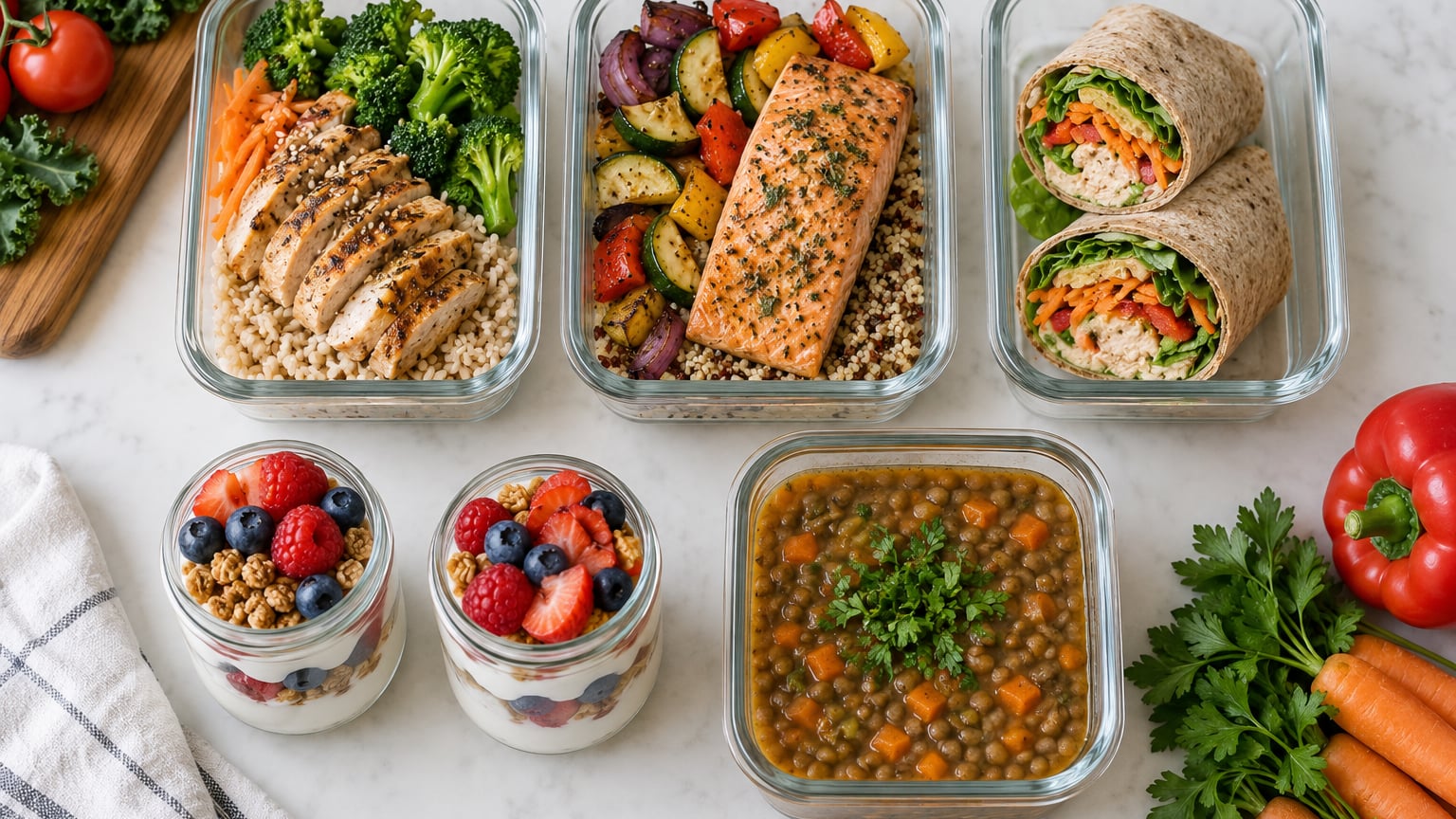
Meal prep ideas for weight loss work for one reason: they decide your portions before the week gets busy. Cook once on a Sunday, split into containers, and the 7pm takeout decision never happens. Every meal below is built around protein, a lot of vegetables and a measured amount of carbs, so a portion still fills you up.
What follows is a bank of ten repeatable meals with batch sizes, rough protein counts, storage times and the swap that makes each one work on a different week. Every idea here reheats, freezes or travels, because a meal you skip on Thursday is a meal that did nothing for you.
People who plan meals ahead tend to eat more consistently, and most of the advice floating around the meal prep communities comes back to the same three things: keep the meals simple enough to repeat, get protein and volume into every meal, and buy the cheap staples. Nobody needs a new recipe every night. Storage and containers matter too; a good meal prep container that does not leak saves more food than any clever sauce.
General information only here. If you are managing a medical condition, pregnant, taking weight-loss medication, or have a history of disordered eating, talk with your doctor or a registered dietitian before changing how you eat.
Table of Contents
- Meal Prep Ideas for Weight Loss at a Glance
- 1. Chicken Burrito Bowls with Brown Rice and Black Beans
- 2. Salmon, Quinoa, and Roasted Vegetable Boxes
- 3. Turkey and Hummus Wrap-Ups
- 4. Greek Yogurt, Berry, and Oat Jars
- 5. Lentil and Vegetable Soup for the Freezer
- 6. Teriyaki-Style Chicken Rice Bowls
- 7. Mediterranean Chickpea and Vegetable Salad
- 8. Turkey Chili with Sweet Potato
- 9. Egg, Vegetable, and Cheese Breakfast Muffins
- 10. Low-Cost Bean and Rice Burrito Bowls
- Frequently Asked Questions
- Conclusion
Meal Prep Ideas for Weight Loss at a Glance
Scan this table first. Pick two from this week, not ten, and only shop for what those two need.
| Meal | Protein or plant base | Active prep effort | Why it supports a weight loss week | Best time-saving method |
|---|---|---|---|---|
| 1. Chicken burrito bowls | Chicken breast with black beans | 30 to 40 minutes | Protein plus a large vegetable portion in one box | Roast chicken and peppers on one sheet pan |
| 2. Salmon quinoa boxes | Salmon with quinoa | 35 to 45 minutes | High protein and oily fish for a filling lunch | One sheet pan for fish and vegetables |
| 3. Turkey and hummus wraps | Lean turkey and hummus | 15 minutes | Whole-grain carb with no cooking at all | Roll the night before, slice in the morning |
| 4. Yogurt, berry and oat jars | Greek yogurt | 10 minutes | Protein and calcium that needs no heat | Layer four jars in five minutes |
| 5. Lentil vegetable soup | Lentils and beans | 20 minutes plus simmer | Fiber-heavy and low in calories per cup | One pot, freeze flat in single portions |
| 6. Teriyaki-style chicken bowls | Chicken breast | 30 minutes | Balanced plate with a controlled sauce portion | Cook a tray of vegetables alongside the chicken |
| 7. Mediterranean chickpea salad | Chickpeas with feta | 15 minutes | Plant protein with a lot of raw crunch | Dress sturdy items only, add leaves before eating |
| 8. Turkey chili with sweet potato | Ground turkey and black beans | 35 minutes | Warm, filling meal that stretches over rice or greens | One pot from stovetop to freezer |
| 9. Egg, vegetable and cheese muffins | Eggs with spinach and peppers | 25 minutes | Portable breakfast with protein built in | Bake a full tin on prep day |
| 10. Low-cost bean and rice bowls | Canned beans | 15 minutes | Cheapest filling base in the list | Cook a pot of rice on Sunday, scoop portions |
How to choose among these meal prep ideas for weight loss
Pick one protein, one carb and one vegetable combination, then repeat it in a different shape. Two lunches and two dinners from this list will carry most of a week. The meal prep lunches that stay interesting by Thursday approach works the same way: keep the base, change the sauce or the vegetable.
Most people do better with two anchor meals and a rotation of vegetables than with a new plan every Sunday. Repetition is not a failure of willpower; it is how the plan survives a bad Tuesday.
1. Chicken Burrito Bowls with Brown Rice and Black Beans
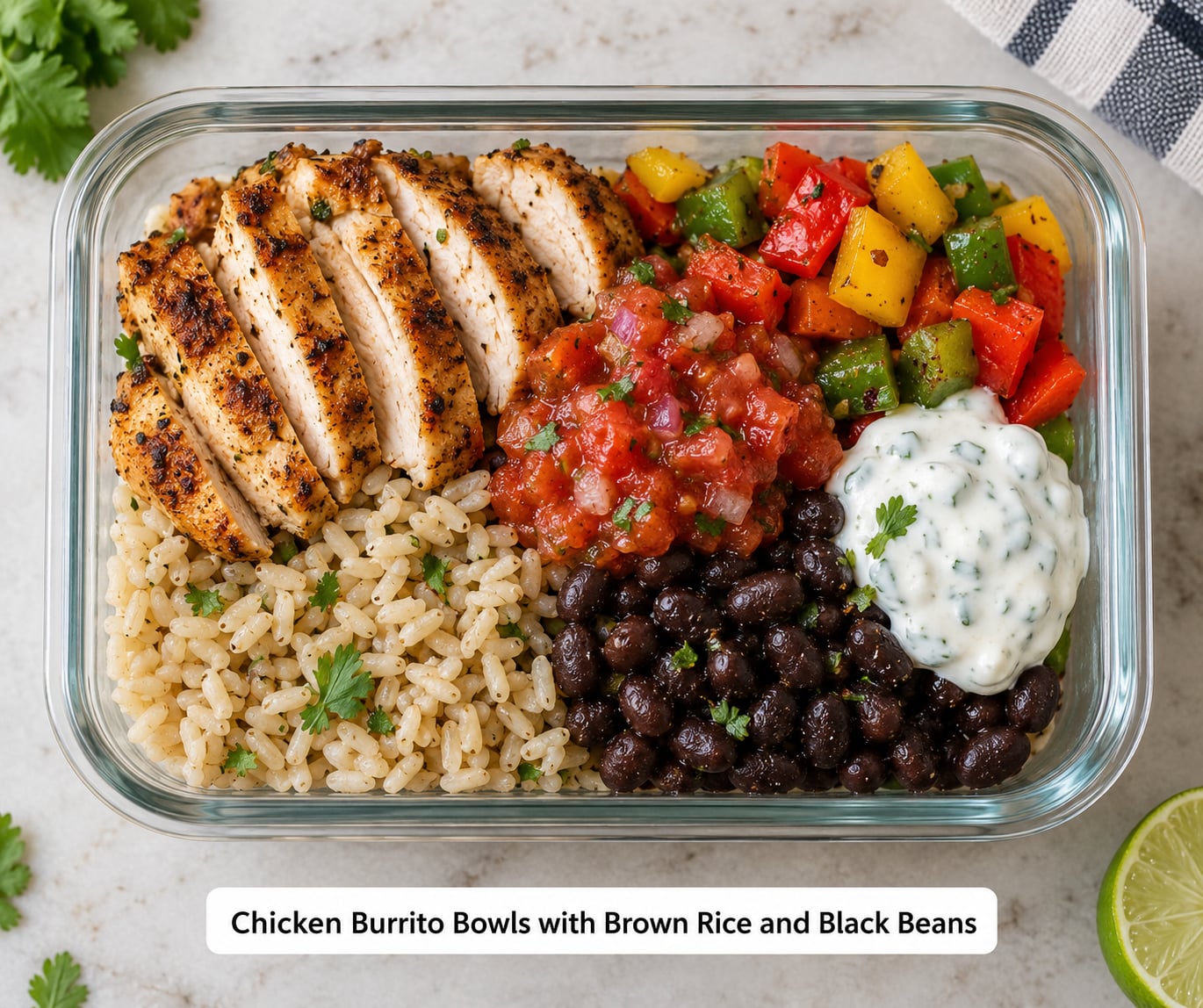
This is the meal most people start with, and the reason is simple: the components are cheap, they keep well, and one pot of rice plus one tray of chicken gives you five or six lunches.
Cook 2 pounds of boneless skinless chicken breast at 400 F until the thickest piece reaches 165 F inside. While it roasts, put 2 cups of dry brown rice in a pot with 4 cups of water, and drain and rinse a 15-ounce can of black beans. Roast a tray of diced peppers and onion at the same time. Add sliced avocado or a spoonful of plain Greek yogurt with lime juice for the sauce, in place of sour cream.
Portion with your hand instead of a scale if you prefer: half the container vegetables, a quarter rice, a quarter chicken, sauce on top after reheating. Keep the wet items in a small separate cup, or the rice turns to paste by Wednesday.
Vary it with ground turkey cooked to 160 F, or with cubes of tofu. Cauliflower rice works too, and so does a small amount of corn. The bowl keeps about four days in the fridge, and the rice and beans freeze on their own for two to three months so you can build a bowl on a week when chicken feels tired.
2. Salmon, Quinoa, and Roasted Vegetable Boxes
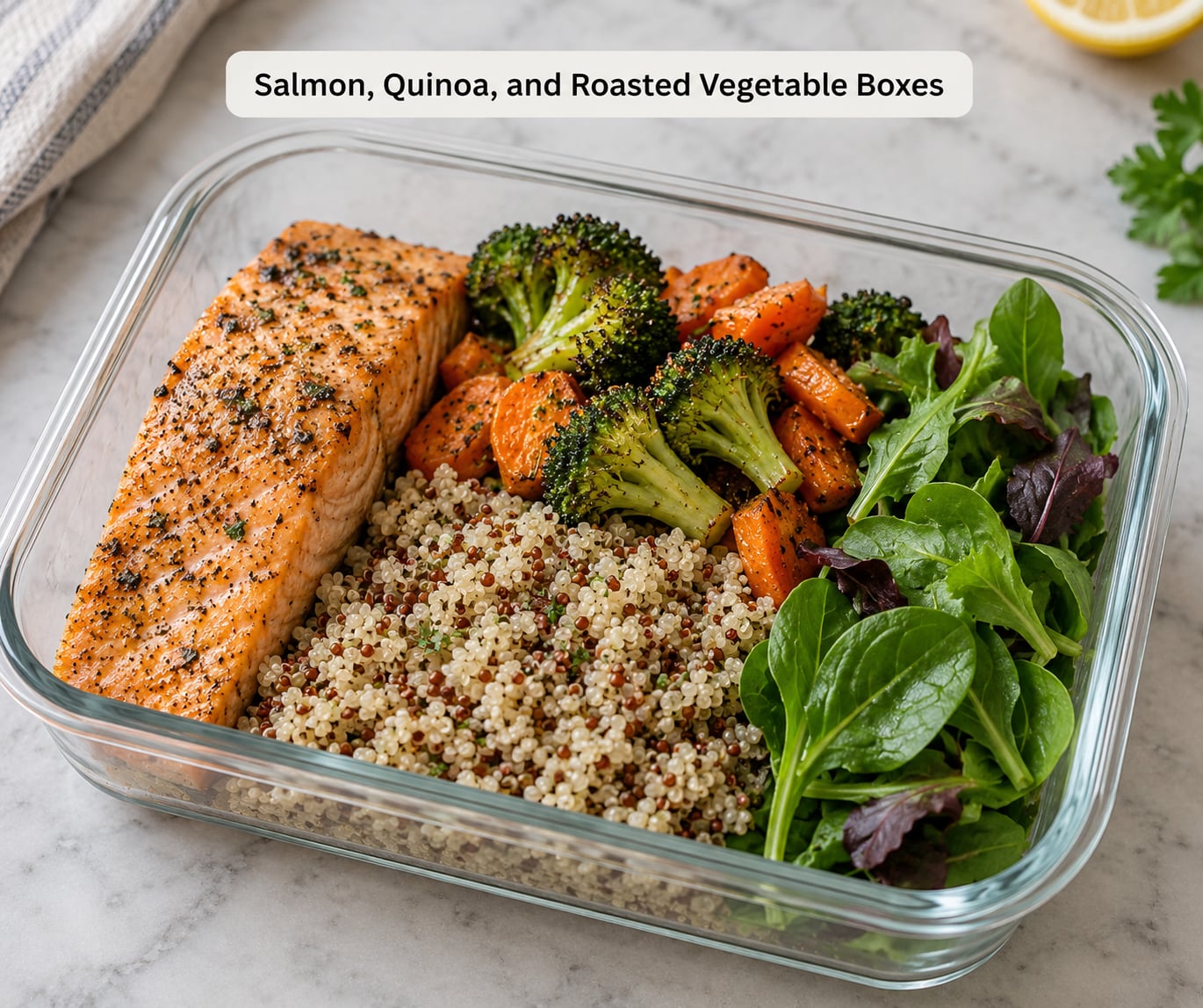
Salmon is the easiest high-protein lunch to build in sections, and the sections are what keep it from turning into a wet grain bowl by Thursday.
Roast about 1.5 pounds of salmon fillet at 400 F until it flakes and hits 145 F at the thickest point, roughly 12 to 15 minutes. Simmer 1 cup of dry quinoa in 2 cups of water for about 15 minutes. On a second sheet pan, roast broccoli, carrots and red onion with a tablespoon of olive oil. Build boxes with a third quinoa, a third vegetables and a third salmon, and add a lemon wedge on the side.
Eat this one early in the week. Cooked fish is good for three to four days in the fridge, and cooked salmon portions freeze well for a month or two. Freeze the vegetables flat and the quinoa flat, and you rebuild the box in four minutes on a night you have no energy.
Budget options work here. Frozen salmon fillets run cheaper than fresh, canned salmon makes good patties with a little egg and panko, and cod, sardines or shrimp all fill the same slot. A yogurt-based dill sauce keeps the box dairy-light and adds protein rather than calories.
3. Turkey and Hummus Wrap-Ups
This is the no-cook option, which makes it the one people actually repeat during a hectic week. A whole-grain tortilla, a thin spread of hummus, four slices of turkey, a handful of spinach and some roasted pepper make a wrap with roughly 25 to 30 grams of protein.
Roll tightly in parchment paper, then slice the roll in half with a serrated knife before storing it. Storing cut side up and pressing the halves against each other keeps the ends from opening in your bag.
Sogginess is the whole game with prepped wraps. Keep wet ingredients out, or use a thicker tortilla warmed for ten seconds in a dry pan first. Pack tomatoes and cucumber separately and add them at lunch. If you want to read the technique in more detail, our guide to meal prepping sandwiches without soggy bread covers the same physics in more depth.
Add a piece of fruit or a small side salad so the wrap is a full meal rather than a snack. Six to eight halves per person cover two lunches, and the rolled wraps keep three to four days wrapped in the fridge.
4. Greek Yogurt, Berry, and Oat Jars
Breakfast is where most prep plans fall apart, so this one takes ten minutes and needs no cooking. Fill four jars in layers: half a cup of plain Greek yogurt, two tablespoons of rolled oats, a handful of berries and a tablespoon of seeds.
Layering looks prettier, but eating straight from the jar is faster on a rushed morning. Both work. The protein does the heavy lifting: a half cup of Greek yogurt typically carries 15 to 20 grams, and oats plus berries add fiber that slows the mid-morning crash.
Choose toppings that hold up rather than ones that dissolve. Chia and hemp seeds, chopped walnuts, and a tablespoon of peanut or almond butter all stay put. Berries freeze well and thaw soft enough to spoon through. Apples brown, so toss them with a little lemon juice.
Keep the jars cold, with an ice pack if they travel, and eat them within four days. To stretch a week, freeze half the batch on the day you make them and move those jars to the fridge the night before. Cottage cheese with pineapple and cinnamon is the dairy-counter version of the same idea, and tofu works if you prefer dairy-free.
5. Lentil and Vegetable Soup for the Freezer
Soup is the best batch-cooking workhorse: it uses cheap ingredients, reheats without drying out, and freezes in flat bags that stack in a drawer. Brown lentils with diced onion, carrot, celery and a little garlic, then add no-salt-added diced tomatoes, a cup or two of low-sodium broth, cumin, smoked paprika and a bay leaf. Simmer 25 to 30 minutes until the lentils soften.
A two-quart pot gives you eight to ten portions of a thick soup, or six if you want it to eat like a meal on its own. A large pot of rice or a jar of yogurt sauce on the side turns it into lunch.
Add fiber without turning it into paste. Hold back a cup of broth and stir it back in at the end for a lighter texture, and blend half of the soup right in the pot. Spinach, kale or chopped green beans go in during the last five minutes. Skip the cream entirely.
Cool it before you portion, refrigerate in shallow containers, and use it within four days. For longer storage, ladle it into freezer bags laid flat, press out the air and freeze. Thaw overnight in the fridge and reheat until steaming hot, 165 F, in a pot or microwave.
6. Teriyaki-Style Chicken Rice Bowls
Store-bought teriyaki is mostly sugar and salt, so a homemade version gives you the flavor with a controlled portion. Simmer low-sodium soy sauce, rice vinegar, grated ginger, minced garlic and a small spoon of honey or maple syrup for about ten minutes. Skip the cornstarch, or use a single teaspoon to thicken it.
Roast a tray of chicken breast at 400 F until it reaches 165 F. Cook 3 cups of dry rice, and roast a sheet of broccoli and carrots. Add sliced cucumber raw at the end, because reheated cucumber turns limp and watery. Build bowls with two-thirds vegetables, one-sixth rice and one-sixth chicken, then spoon the sauce over after reheating.
One tablespoon of soy sauce per portion keeps sodium reasonable, and home sauce usually costs a fraction of the bottled version. Keep the sauce in its own small cup if you like it separate, since poured sauce sits on the rice and dries it out.
Swap the chicken for shrimp, tofu or tempeh. Half cauliflower rice blended with half brown rice gives a lighter base that still reheats well. These bowls keep four days in the fridge, and the sauce freezes in ice-cube portions for the weeks ahead.
7. Mediterranean Chickpea and Vegetable Salad
Raw salads look like they belong on a summer table, not in a meal prep rotation, but this one holds up for four days if you dress it in the right order. Combine two cans of rinsed chickpeas, diced cucumber, chopped tomato, bell pepper and a few olives, then dress with lemon juice, olive oil, oregano and a spoon of feta.
Dress only the sturdy ingredients. Fold in the delicate greens and the feta right before you eat, or keep them in a separate cup. That single habit is the difference between a crisp salad on Thursday and a soggy one.
On its own this is a side dish. Add sliced grilled chicken, a hard-boiled egg or a small portion of tuna and it becomes lunch with 20 to 30 grams of protein. Serve it over greens with a cup of the lentil soup from above, or add a whole-grain pita on the side.
Covered in the fridge, this keeps about four days, and the chickpeas hold five if you dress them lightly. Leftover cucumber and peppers from the chopping board go into the wrap rolls from idea three, which is a good argument for cutting extra on prep day.
8. Turkey Chili with Sweet Potato
Chili is comfort food that happens to be portion-friendly, mostly because you decide the size of the bowl before the pan is finished. Brown 1.5 pounds of lean ground turkey until it reaches 160 F, adding onion and bell pepper with the last few minutes so they soften without burning.
Stir in rinsed black beans, no-salt-added diced tomatoes, cubed sweet potato, chili powder, cumin, oregano and a small spoon of cocoa powder. The cocoa sounds odd and works: it takes the sharp edge off without adding anything sweet. Simmer 25 to 30 minutes.
Serve over a measured half cup of rice, or spoon it onto greens with a spoonful of plain yogurt. Skipping the rice is an easy win on days when you want the bowl lighter.
Season with acid rather than salt: a squeeze of lime, a splash of vinegar, hot sauce and smoked paprika do most of the work. Freeze this one flat in single portions for up to three months, cool it fully first, and thaw overnight. Reheat covered with a splash of broth so the bottom does not scorch.
9. Egg, Vegetable, and Cheese Breakfast Muffins
For early shifts and mornings where eating at the table is not an option, egg muffins are hard to beat. Whisk 8 eggs with a handful of chopped spinach, diced bell pepper, a little onion and about a third cup of shredded cheddar or egg whites. Divide between 12 muffin cups and bake at 350 F for 18 to 22 minutes until the centers are set.
Two muffins make a serving with roughly 14 to 16 grams of protein. Cool them on a rack for ten minutes before you turn them out, and pack them in a container lined with paper, which stops the tops sticking.
They keep four days in the fridge. For longer storage, wrap cooled muffins individually and freeze them for up to two months. Reheat from frozen in a microwave for about a minute with a damp paper towel underneath, which stops them turning rubbery.
Serve two muffins with a piece of fruit and one slice of whole-grain toast, and it is a breakfast with staying power. Use egg whites plus extra spinach for a lower-fat version, or add chopped turkey from the wraps in idea three to use up what you have.
10. Low-Cost Bean and Rice Burrito Bowls
When the grocery budget is the deciding factor, this bowl is hard to beat. Combine cooked rice, canned beans and corn with whatever vegetables are cheap that week: frozen corn, shredded cabbage, frozen broccoli or a bagged salad mix.
Layer instead of mixing. Half the container is vegetables, a quarter rice and a quarter beans, with salsa spooned over the beans so it does not soak the rice. For seasoning, use cumin, garlic powder, chili powder and a squeeze of lime. Skip the sour cream and use a spoon of plain yogurt.
Dry beans are the cheapest protein per serving by a wide margin, and cooked rice scoops into freezer portions in cup measures. A pot of rice on Sunday and a few cans of beans covers three lunches for less than the cost of one takeaway order.
These are different from the burrito bowls in idea one on purpose: those use fresh chicken, roasted peppers and a yogurt sauce you make from scratch. These use pantry staples and a fifteen-minute assembly. Keep both in your rotation and you never buy the same four ingredients two weeks running.
Frequently Asked Questions
Can you lose weight just by meal prepping?
Meal prepping does not create a calorie deficit by itself, but it makes one much easier to keep. Deciding portions and recipes once, ahead of time, removes the daily choice that most often ends in takeout, and it lets you hit a protein and fiber target without tracking every meal from scratch. Total calories still do the work.
How many calories should each weight loss meal have?
For most adults, a meal lands somewhere between 350 and 600 calories, and the total daily number matters more than any single meal. Three meals plus one or two snacks fits many adults at roughly 1,400 to 1,800 calories. Body size, activity level and health conditions shift that range a lot, so a registered dietitian can set a target you should trust.
How long do meal prep containers last in the fridge?
Most cooked meals kept in sealed containers stay good three to four days in the fridge, and four is the point where quality starts dropping, not safety. Use shallow containers so food cools fast, refrigerate within two hours of cooking, and reheat until steaming hot, 165 F, in the middle of the food. If you are prepping a full week, freeze the later days.
What can I freeze and still eat later?
Soups, chilis, curries, cooked grains, marinated proteins and roasted vegetables all freeze well, usually for two to three months at zero F. Salads, yogurt jars, eggs, cucumber and anything crisp do not. Freeze flat in bags or in single portions, cool the food completely first, and thaw overnight in the fridge rather than on the counter.
Is meal prep cheaper than eating out?
It usually is, once you compare real numbers. A pot of rice, a batch of chicken and a bag of frozen vegetables can produce five or six lunches for a fraction of one takeaway order, and the leftovers stretch into a second meal. The saving shrinks when you buy specialty sauces and single-use ingredients, which is another reason to keep the sauces simple.
What do I do when meal prep gets boring by Thursday?
Keep the base and change one thing rather than starting over. Same chicken and rice, different vegetable or a different sauce, reads as a different meal and uses the same prep. Rotating two or three reliable meals instead of cooking ten also cuts your Sunday time in half, and mixing in one fresh meal a week keeps the week feeling flexible.
Conclusion
The first step is smaller than most people expect. Choose two meals from these meal prep ideas for weight loss, buy only what those two need, and prep a realistic number of portions for your week. Most readers start with the chicken burrito bowls or the wrap-ups and add a vegetable to whatever protein they already cook.
Keep the sauces simple, the containers portioned and the protein at every meal. Then, once the routine holds for a couple of weeks, add a third meal and rotate the vegetables so nothing gets stale.
If you want the numbers personalized to your body, your activity level and any health conditions, that is a conversation to have with a registered dietitian rather than a list on the internet.