
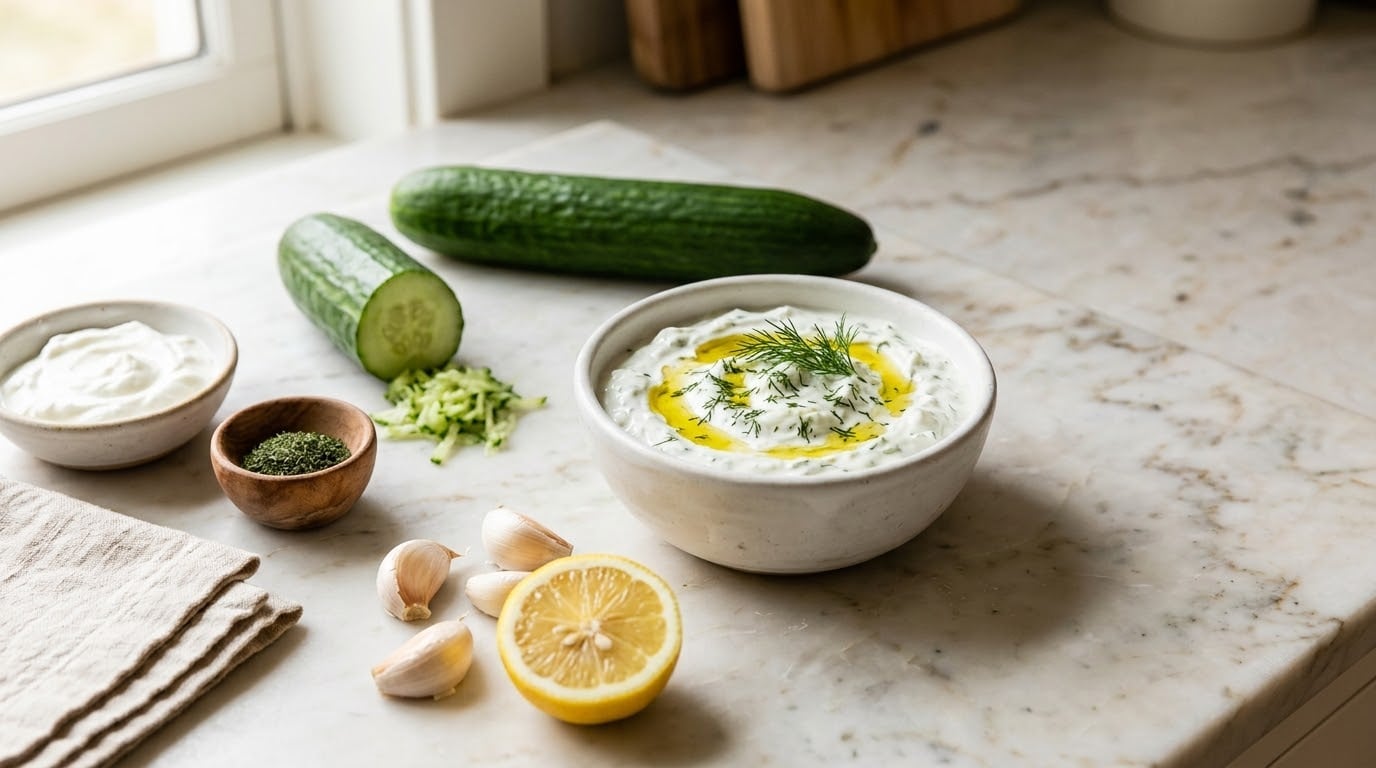
Tzatziki sauce takes ten minutes and five ingredients you probably already have: thick Greek yogurt, grated cucumber, garlic, lemon juice, and fresh dill. The whole job is squeezing the water out of the cucumber, because that moisture is the only thing standing between you and a watery bowl of disappointment.
No cooking, no special equipment beyond a box grater and a clean towel. It is a dip for pita chips, a dressing for grilled chicken, a spread for wraps and sandwiches, and a fixture on any mezze table you put together.
What You Need
These quantities make roughly one cup of sauce, which is enough for four people as a dip. The two ingredients worth being deliberate about are the yogurt and the cucumber; everything else you can eyeball.
The essentials
- Greek yogurt, 1 cup (240 g). Full-fat and plain, with no sugar or added starch. If the tub says “strained,” even better.
- One medium cucumber, about 8 ounces (225 g). An English or Persian cucumber works well because the skin is tender and the seeds are small. Leave the peel on.
- Garlic, 1 to 2 cloves, grated or finely minced.
- Lemon juice, 1 tablespoon, plus a little zest if you like.
- Fresh dill, 2 tablespoons, chopped. Fresh mint, parsley, or a teaspoon of dried dill all work too.
- Extra virgin olive oil, 1 tablespoon.
- Kosher salt and black pepper, to taste. Start with about half a teaspoon of the salt on the cucumber, then season the sauce.
The tools that matter
A box grater gives you the loosest, most absorbent cucumber, which is what you want. A food processor with the shredding disc works well too, just pulse rather than puree. A microplane turns the garlic into a paste that dissolves into the yogurt instead of sitting in flecks.
For squeezing, a clean cotton tea towel, a paper towel, or a piece of cheesecloth in a fine mesh strainer all do the job. Wrap the shreds, twist, and press down until very little liquid comes out.
Step-by-Step
How to Make Tzatziki Sauce Step 1: Prepare the Cucumber
Grate the cucumber on the large holes of a box grater and set the shreds in a colander set over a bowl. Sprinkle on the salt and let it sit five minutes; the salt pulls water out of the cucumber and you will see it collecting in the bowl underneath.
For a thicker, restaurant-style result, let it drain longer. Salt the shreds, leave them in a sieve over a bowl in the fridge, and walk away for several hours or overnight. That extra passive time is the single biggest jump in texture, and it costs you nothing but a bit of fridge space.
Now get the liquid out. Bundle the cucumber in your towel, twist the top closed, and press hard with both hands over the sink. Squeeze, release, squeeze again until the stream slows to a trickle. You have squeezed enough when the shreds look damp rather than dripping, and the towel is only faintly wet.
You will likely be surprised by how much liquid comes out. A cucumber is about 95 percent water, and a mediocre version of this recipe gives most of that water to the yogurt. If you are skipping the salt step, at least squeeze twice as hard and for twice as long.
One optional trick: seed the cucumber first. Halve it lengthwise, scoop the watery center out with a teaspoon, and grate only the outer flesh. It takes two minutes and gives you a smoother, less watery sauce.
How to Make Tzatziki Sauce Step 2: Combine the Yogurt and Seasonings
Put the Greek yogurt in a medium bowl. Add the grated garlic, lemon juice, olive oil, chopped dill, a pinch of salt, and a few grinds of black pepper. Stir with a spoon or a small whisk until the mixture is completely smooth and evenly seasoned, with no streaks of garlic left in one spot.
Taste it on its own before the cucumber goes in. The yogurt base should already taste bright and slightly sharp on its own, because the cucumber will dilute it. If the garlic tastes sharp and aggressive right now, it will mellow once it sits in the fridge, so go easy rather than heavy.
No Greek yogurt? Sour cream works, either as a full replacement or as half the yogurt and half sour cream, which is what many tavernas do. The result is a little tangier and richer, closer to the traditional sheep’s milk version. Plain nonfat Greek yogurt also works, but the sauce will be thinner and more acidic.
No dill? Mint, parsley, or chives are all reasonable. A teaspoon of dried dill saves you from buying a whole bunch, though the flavor is softer and less aromatic. And if you like heat, a pinch of cayenne or red pepper flakes does not fight the garlic.
How to Make Tzatziki Sauce Step 3: Add the Cucumber
Add the squeezed cucumber to the seasoned yogurt and fold gently with a spoon or spatula until every shred is coated. Do this in about thirty seconds, not three minutes. Overmixing breaks the yogurt down and makes the sauce thinner and slightly grainy, which is exactly what you are trying to avoid.
You are looking for a thick, spoon-coating texture that holds a soft peak for a second before settling. It should not slump flat on the plate, and there should be no visible pooling of liquid around the edges of the bowl. Lift a spoonful and tip the bowl; if the sauce creeps down slowly rather than running off, the consistency is right.
If it looks looser than you want right now, resist the urge to add more cucumber, because cucumber is mostly water and you will just make it thinner. Instead, stir in a tablespoon or two of extra thick Greek yogurt, or a spoonful of labneh if you have it. Then let it sit in the fridge for 30 minutes; yogurt thickens noticeably as it chills, and much of what looks thin at room temperature sets up properly cold.
How to Make Tzatziki Sauce Step 4: Chill and Serve
Cover the bowl and refrigerate for at least 30 minutes, ideally an hour, before serving. The sauce needs cold time for the flavors to meld, and the texture firms as it chills. If you can spare the time, the base minus the cucumber keeps well for two days, so you can stir the fresh cucumber in right before you need it.
Taste it cold and adjust once more. Too sharp means more yogurt or a touch of sugar. Too flat means another squeeze of lemon. Missing salt is the most common last-minute fix, and a quarter teaspoon usually does it.
Serve it chilled, with a thin drizzle of olive oil and a few dill fronds on top. It is a dip for warm pita and pita chips, a companion to gyros, souvlaki, and grilled meats, and a cool counterweight to spicy falafel and grilled vegetables on a mezze tray. If you want the whole platter to look catered, it belongs next to the olives, the feta, and the stuffed grape leaves.
It also earns its place in a sandwich. A thin layer on the bread won’t soak through the way mayonnaise does, which means a layered sandwich that holds together keeps its structure even when the filling is wet. For a chicken or falafel wrap, spread it on the tortilla last, right before rolling, and go easy on the layer. If you are packing a lunch box, the sauce travels better in a separate small container and it stays lively through the morning, which is the same reason to keep wet fillings out of a sandwich made the night before.
Common Mistakes
The sauce is watery and won’t thicken. Almost always the cucumber. Next time, salt the shreds, wait, squeeze until barely damp, and strain the yogurt if your yogurt looks loose. If it is already watery, stir in extra strained Greek yogurt tablespoon by tablespoon, then chill it for 30 minutes before judging again.
You used regular yogurt instead of Greek. Regular yogurt is mostly whey and water, so it thins as it sits and it splits. If that is all you have, strain it through cheesecloth for two hours in the fridge first, or mix it 50/50 with sour cream. The texture will not be identical, but it will hold up as a dip.
It tastes too sour. Usually too much lemon, low-fat yogurt, or both working together. Fix it by folding in more full-fat Greek yogurt, which dilutes the acid without flattening the flavor. A pinch of sugar is fine, and less lemon next time is the real cure.
The raw garlic is overpowering. Two things help. Grate it on a microplane so it disperses rather than sitting in chunks, and start with one clove instead of two. Garlic mellows noticeably after an hour in the fridge, so taste the sauce cold before deciding it needs more.
The texture is thin even with a drained cucumber. Check the yogurt. If it is loose or has a watery skin on top, strain it through a fine mesh strainer lined with cheesecloth for an hour in the fridge. You will lose a little volume and gain a lot of body.
You mixed too hard. Vigorous whisking breaks the yogurt’s structure and leaves the sauce thin and slightly grainy. Fold instead, and use a spoon rather than a whisk once the cucumber is in.
Frequently Asked Questions
How can I make tzatziki sauce thicker?
Drain the cucumber harder: salt the shreds, wait five minutes or longer, then squeeze them in a towel until barely damp. Use full-fat Greek yogurt that lists no added starch, and strain it through cheesecloth if it looks loose. For a sauce that is already thin, stir in extra strained yogurt or labneh a spoonful at a time and refrigerate for 30 minutes, since yogurt firms noticeably as it chills.
What can I use instead of Greek yogurt in tzatziki sauce?
Sour cream is the best swap, either replacing the yogurt entirely or taking half the yogurt and half sour cream, which is close to the traditional sheep’s milk tang. Labneh is even thicker and works well. Plain nonfat Greek yogurt will work but gives a thinner, more acidic sauce. Avoid plain regular yogurt, which is mostly whey and will split.
How long does homemade tzatziki sauce keep in the refrigerator?
Stored in a sealed container in the fridge, homemade tzatziki keeps well for about 3 to 5 days, and it is usually at its best within the first two. Use a clean container each time you dip, since a spoon going in and out is what introduces off flavors and bacteria. Freezing is not worth it: the dairy turns grainy and the cucumber goes mushy once thawed.
Can I make tzatziki sauce without dill?
Yes, and it is still good. Fresh mint, parsley, and chives all stand in for dill, with mint leaning sweet and parsley leaning grassy. If you have dried dill, one teaspoon works, though the flavor is softer than fresh. You can also leave the herb out entirely and lean on the garlic, lemon, and olive oil for a simpler sauce that still tastes balanced.
Why is my tzatziki sauce watery?
The cucumber is almost always the cause. Cucumbers are about 95 percent water, and if the shreds go into the yogurt without being squeezed, that water turns the sauce thin within minutes. The seeds add more liquid, so seeding the cucumber first helps. Loose yogurt is the other common reason, and straining it for an hour in the fridge fixes that.
Is tzatziki sauce better served cold or at room temperature?
Cold, straight from the fridge, is the traditional way to serve it and the way most people expect. Letting it sit at room temperature for an hour or so is fine too, and the flavors soften further, but it will lose some of its body. Take it out about 20 minutes before serving so it is not fridge-cold, without letting it go warm.
Conclusion
Start with the cucumber, not the yogurt. Grate it, salt it, wait five minutes, and squeeze it until the shreds look damp rather than dripping; that single step is the difference between a thick sauce and a puddle. Then stir the seasonings into a cup of thick Greek yogurt, fold the cucumber through, and refrigerate it for at least 30 minutes before serving.
Once it is cold, it works almost anywhere you would use a spread or a dip: sandwiches and wraps, grilled chicken or lamb, raw vegetables, pita chips, a mezze tray alongside a home deli platter, or a spoonful over a grain bowl. If the first batch turns out thin, stir in more yogurt and give it another half hour in the fridge before you decide it was a failure.