
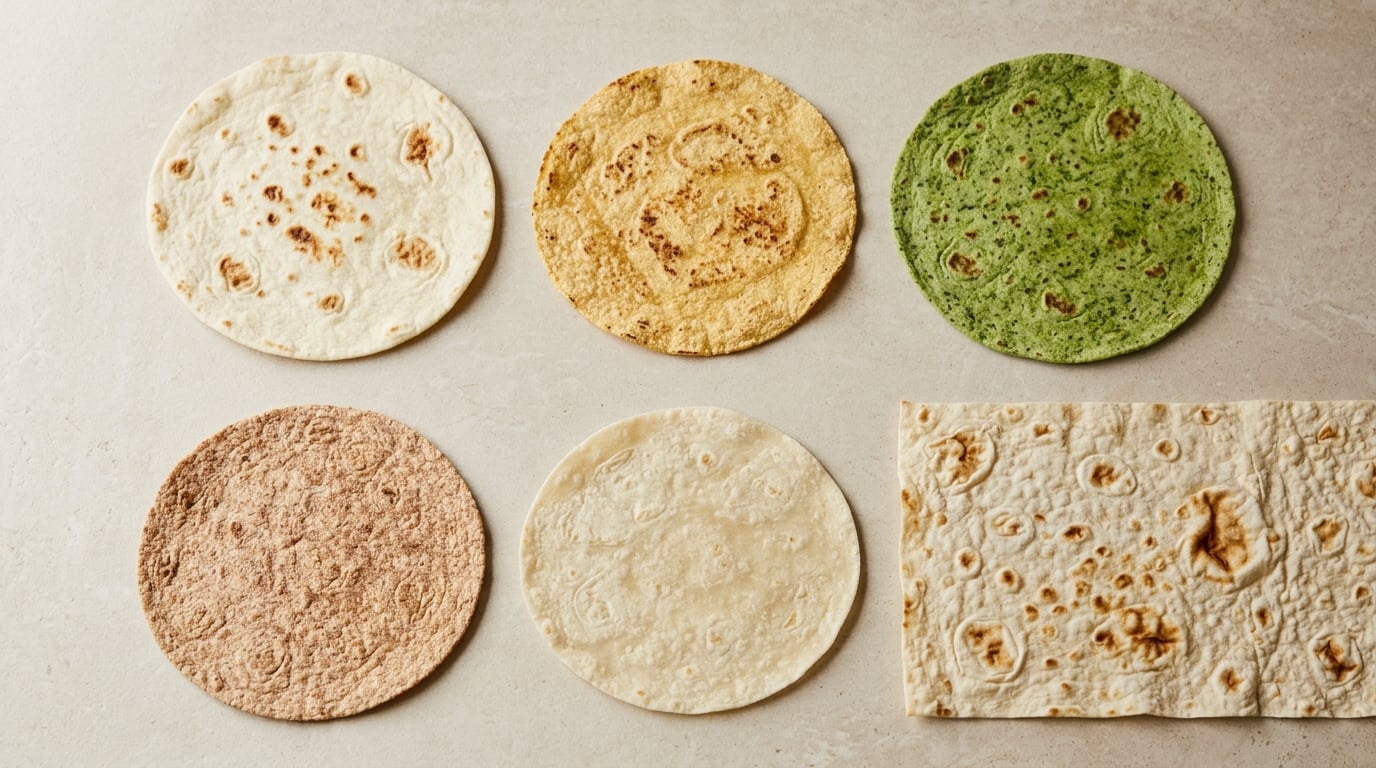
The best tortillas and wraps for sandwich wraps that don’t crack are soft, medium-thick flour tortillas warmed briefly before rolling. Corn, spinach, whole wheat, gluten-free blends and lavash all work, but each asks for a different technique, and a cold or stale tortilla will split no matter what you put in it.
A wrap cracks for one of three reasons: the tortilla lost moisture, the filling is stiff or too bulky, or you rolled it too tightly. Fix any one of those and the same tortilla that tore yesterday rolls clean today. That is why the right pick matters less than the right prep, though the two go together.
Table of Contents
- Best Tortillas and Wraps for Sandwich Wraps That Don’t Crack at a Glance
- Best Overall: Pliant Flour Tortillas
- Best Corn Tortillas for Strong, Flavorful Wraps
- Best Spinach Tortillas for Color and Mild Flavor
- Best Whole-Wheat Tortillas for a Heartier Wrap
- Best Gluten-Free Wraps That Stay Flexible
- Best Lavash for Large, Thin Sandwich Wraps
- What Makes a Sandwich Wrap Crack or Tear?
- How Do You Keep Wraps Soft and Fresh?
- Which Should You Choose?
- Frequently Asked Questions
- What type of tortilla is least likely to crack when rolled?
- Can sandwich wraps be made ahead without becoming soggy?
- Should I warm a tortilla before adding wet fillings?
- Which tortilla holds the most chicken, rice, or vegetables?
- Are corn tortillas better than flour tortillas for cold sandwich wraps?
- How should tortillas be stored to keep them flexible?
Best Tortillas and Wraps for Sandwich Wraps That Don’t Crack at a Glance
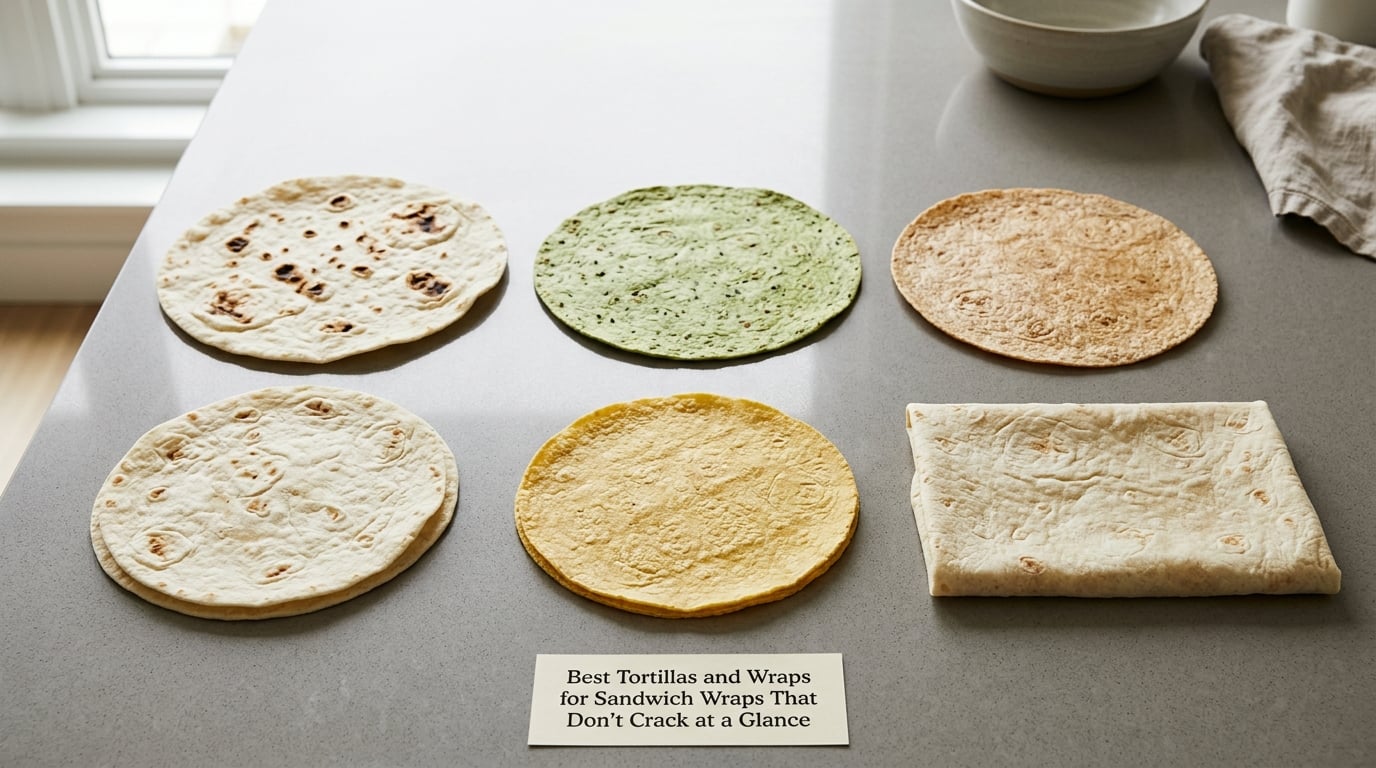
| Wrap type | Crack resistance | Flexibility | Flavor | Best fillings | Dietary fit | Where to find it | Value for daily use |
|---|---|---|---|---|---|---|---|
| Medium flour tortilla | High when warmed | Very high | Mild, slightly sweet | Chicken, deli meat, rice, cooked vegetables | Vegetarian-friendly, contains wheat | Every grocery aisle | Best per wrap |
| Corn tortilla | High when warm, low when cold | High | Sweet, toasted, aromatic | Black beans, cheese, salsa, grilled meat | Naturally gluten-free, check labels | Hispanic grocery aisle, mainstream grocery | Good |
| Spinach tortilla | Medium to high | Medium to high | Mild, vegetable-forward | Turkey, cream cheese, egg salad, cucumber | Vegetarian options available | Refrigerated produce section | Good |
| Whole-wheat tortilla | Medium | Medium | Nutty, hearty | Hummus, roasted vegetables, grilled chicken | Higher fiber, contains wheat | Natural foods aisle, mainstream grocery | Moderate |
| Gluten-free blend | Varies widely | Varies widely | Varies from neutral to earthy | Light sandwich fillings, cheese, deli slices | Gluten-free, varies by certification | Health food aisle, national chains | Moderate to high |
| Lavash | High while fresh | High when properly hydrated | Subtle, cracker-like | Small portions of chicken, lettuce, tomato | Often wheat-free, check labels | Middle Eastern and specialty grocers | Low per sheet, low per usable wrap |
Read across the table and the pattern is clear: moisture is the deciding factor. Everything with a high crack-resistance rating needs a warm-up first, and everything that cracks easily improves dramatically once you check the bend.
Best Overall: Pliant Flour Tortillas
A soft flour tortilla is the most dependable all-purpose sandwich wrap because wheat gluten gives it elasticity no other everyday option matches. Bend it and it folds back flat instead of creasing white and breaking. That is the whole reason a plain flour tortilla is the default at sandwich counters.
Why medium thickness wins over thick and thin
Thick tortillas have too much structural weight for the roll, and the folded end often splits first. Very thin ones lack the give to wrap around a chunky filling, so they buckle and crease rather than curve. A medium tortilla distributes the filling across the widest surface and seals cleanly at the bottom.
Most of the time moisture is what makes a flour tortilla dependable, and that comes down to how you store and warm it. Refrigerated tortillas stored in their original packaging stay pliable; tortillas left out or stored sealed in plastic after opening dry out fast. Check the wrap before you commit your filling. If it folds without complaint, use it cold. If it cracks at the first bend, warm it first.
Warming is quick. Ten to fifteen seconds in the microwave, or a minute in a dry skillet over medium heat, is enough to relax the starch and return the give. Long heating dries the edge out, and a dried edge is exactly where the tear starts.
The chicken and vegetable wrap test
Grill two chicken thighs, slice them thin, and pile them onto a warmed medium flour tortilla with shredded lettuce, diced tomato, and a spoonful of mayo or Greek yogurt. Roll from the side nearest you, tuck the two ends in as you go, and keep the seam at the bottom of the plate. The tortilla carries a full lunch portion without splitting because medium thickness spreads the weight instead of concentrating it at the fold.
Best Corn Tortillas for Strong, Flavorful Wraps
Corn tortillas deliver more aroma and toasted flavor than any flour wrap, and a properly softened one bends as well as flour. The catch is temperature: a cold corn tortilla cracks, and there is no brand or thickness that fixes that.
Corn tortillas versus masa harina tortillas
A standard corn tortilla pressed from masa harina, the traditional nixtamalized corn dough, is the classic choice. Pressed or lightly toasted versions are more strongly flavored but less forgiving, so they need a longer warm-up and a thinner filling layer. Fresh-pressed tortillas from a tortilleria are the softest option of the three and the easiest to roll while warm.
Skip very small tortillas. Taco-sized rounds are built for a folded street taco, and they run out of surface area the moment you add more than a few bites of filling. For a wrap, choose a large round, close to fajita size, and stay away from the smallest street-taco size in the package.
The warm and wrap method
Warm each corn tortilla directly over a gas flame or in a dry skillet for fifteen to twenty seconds per side, until it is pliable and shows light browning. Stack them in a clean towel and roll immediately, while they are still warm. A short second warm-up restores flexibility if a stack has cooled down while you cooked the filling.
Black beans, shredded cheese, and a spoonful of salsa make the classic version. Warm the tortilla, mash a layer of beans across the center, add cheese and salsa to one side, roll, and eat while soft. The salsa adds moisture on the inside, which is helpful, but too much turns the base soggy within an hour.
Best Spinach Tortillas for Color and Mild Flavor
Spinach tortillas are a good pick when you want color and a mild flavor that will not compete with the filling. The green is mostly cosmetic, so judge them on pliability rather than appearance. A spinach tortilla that bends into a wide U without any white lines in the fold is the right one.
Fresh versus shelf-stable spinach tortillas
Refrigerated fresh spinach tortillas sit in the produce section and are usually softer, since they have less time to lose water. Shelf-stable versions travel better and keep longer, but they are drier and crack more readily, especially in the outer ring where the dough stretched most.
Traditional versions tend to be pliant and mild. Low-fat versions trade water for fat reduction, and a few labels you can check matter more than the word low-fat on the front: a short ingredient list, no preservatives, and a stated moisture source such as vegetable oil rather than a starch binder tend to mean a tortilla that stays soft. Low-fat tortillas that crack around a thick filling are not a good lunch wrap, no matter what the label claims.
The turkey and cream cheese wrap
Mix softened cream cheese with chopped spinach and a little grated carrot, spread it on a warmed spinach tortilla, and add two slices of turkey plus thin cucumber rounds. Roll it and cut it in half on the diagonal. Because the filling is soft and spread thin rather than stacked, the tortilla handles the roll without splitting even at medium thickness.
Best Whole-Wheat Tortillas for a Heartier Wrap
Whole-wheat tortillas win on texture and fiber, and they roll well when they are soft. The reason many of them crack is that whole grain flour absorbs more water than refined flour, and the bran makes the dough stiffer. Look for a soft whole-wheat tortilla in the refrigerated section rather than the long-life shelf version.
Compare soft whole wheat against lower-fat and whole-grain versions. Soft whole wheat is the most flexible of the three. Lower-fat versions are drier and crack more around heavier fillings. Multigrain versions add seeds and extra grains that make them slightly crisp and less forgiving, which works for a lighter wrap but not for a full lunch.
Avoid very thin, dry, or refrigerated display tortillas that have been sitting open, since those are the ones that split at the seam. A hummus, roasted vegetable, and grilled chicken wrap is a good test: hummus adds moisture to the center, which helps the whole-wheat tortilla stay flexible. Warm it first, keep the filling spread thin and slightly off-center, and roll it snugly rather than tight.
Best Gluten-Free Wraps That Stay Flexible
Gluten-free wraps do not split because they are gluten-free. They split because most of them replace gluten with starches and gums, and those blends vary enormously in how well they hold together.
Rice tortillas, cassava tortillas, and flour blends compared
Rice tortillas are neutral-tasting, mildly chewy, and the most reliable of the three for rolling. Cassava tortillas are the stretchiest and often the best behaved around wet fillings, with a slightly tangy note. Gluten-free flour blends made from rice, tapioca, or chickpea flour vary the most: some are tender, and some are dense enough that they crumble at the first bend. Compare cost, since the blends and cassava options usually cost more per wrap than rice.
Gluten-free does not automatically mean softer or more elastic, so a warm test is worth two minutes. If you need certified gluten-free for a medical reason, read the label for certification rather than assuming, and check the allergy statement on the package. People with celiac disease need a product made in a facility that handles gluten.
For the warm test, put a rice tortilla in a dry skillet for fifteen seconds per side, then let it cool thirty seconds so it is warm and not hot. Fold it in half. If the fold is smooth and the edge does not split, it will handle a sandwich. If the edge fractures, warm it again for a few seconds and try once more before you rule it out.
Best Lavash for Large, Thin Sandwich Wraps
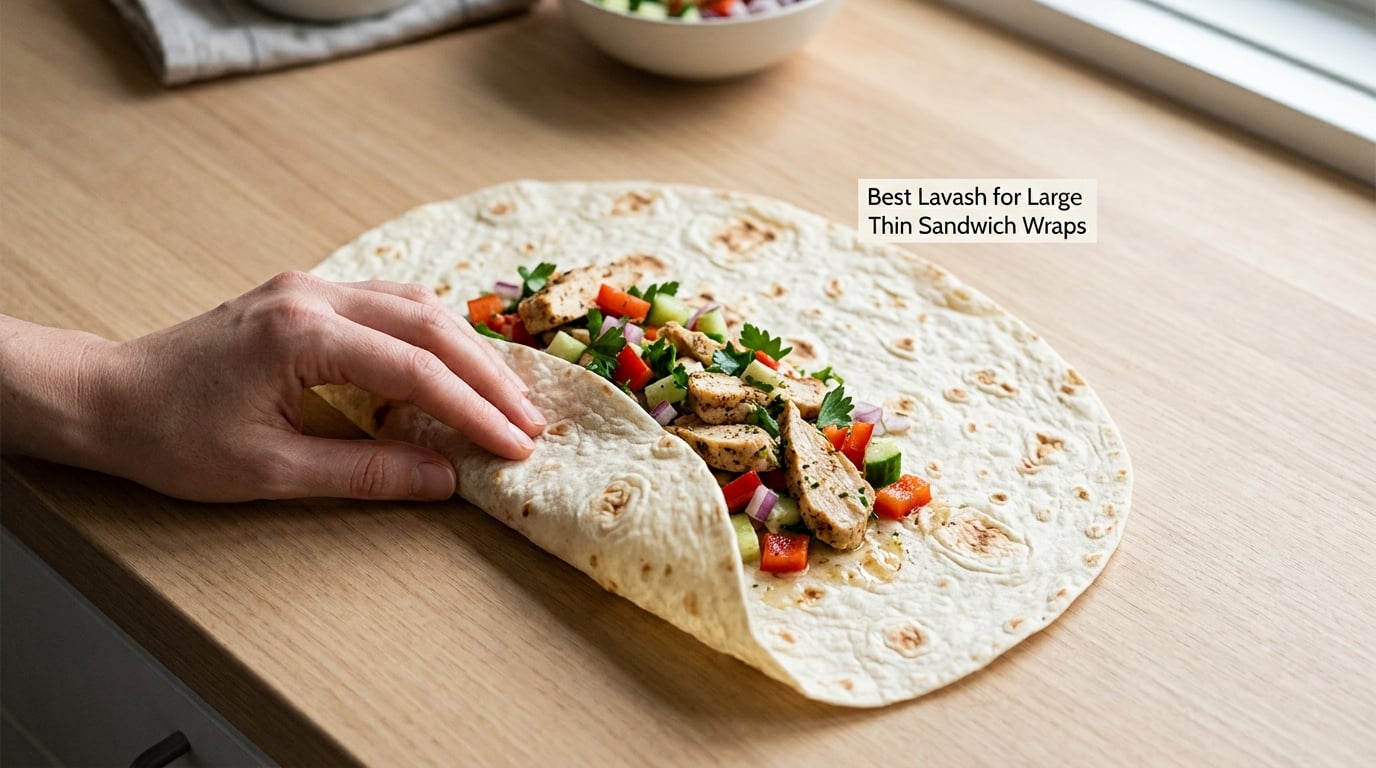
Lavash is a large, thin flatbread baked on a stone, not a rolled tortilla, and that difference shapes how you use it. It is wider and thinner, it bakes crisp rather than soft, and its tradition is a freshly made wrap filled and eaten the same day. A packaged lavash that has gone brittle needs moisture before it will roll at all.
Use it for smaller portions rather than bulky cold fillings. A chicken, lettuce, and tomato portion works well. A wrap packed with thick slices of cold meat and a heavy spread is where the sheet gives up, because lavash has almost no structural thickness to work with.
Hydrate it properly. Lightly dampen the sheet with a few drops of water, or warm it briefly in a covered pan, until it becomes flexible without feeling wet. Then fold rather than roll, folding the two sides toward the center like a letter, and eat it the same day. If you want to prep ahead, roll a completed lavash in parchment paper and refrigerate it for a short window rather than trying to store the sheet itself.
What Makes a Sandwich Wrap Crack or Tear?
Cracking has about six causes, and they are all fixable once you know which one you hit.
- The tortilla is dry or old. Tortillas that have been open for weeks, or stored airtight after opening, lose the moisture that lets them bend. Buy smaller packages, refrigerate in the original packaging, and use them within the package window.
- You rolled a warm tortilla too soon. A tortilla straight off heat is soft but fragile until it cools a little. Let it rest thirty seconds so the moisture spreads evenly.
- The filling is stiff and sits in the middle. Strips of raw carrot, cold meat, or a thick mound of filling in the center create a ridge the tortilla has to bend over twice. Spread the filling thin and slightly off-center, leaving the middle relatively clear.
- There is too much filling. Overfilling forces the tortilla into a tight curve. Less filling, spread wider, beats more filling piled high.
- You rolled it too tight. A tight roll stretches the outer edge until it splits. Roll snug enough to hold, and stop there.
- You waited too long to eat it. A warm rolled wrap stiffens as it cools. Eat while soft, or warm again for a few seconds.
The bend test takes five seconds. Bend the tortilla into a half circle with both hands. Good pliability means a smooth curve and no white stress lines. A white crease means it will tear at the fold, so warm it again and retest. That single habit fixes most cracking before it starts.
How Do You Keep Wraps Soft and Fresh?
Keep tortillas in their original packaging and refrigerate them if the package says to, which most soft and refrigerated tortillas do. Use them within the window on the box rather than assuming the printed date is the last safe day for quality.
For meal prep, assemble the wrap the night before and refrigerate it whole in a container or wrap it tightly in parchment. Expect a softer, less crisp tortilla in the morning, which is normal. Some people assemble the components separately and roll in the morning, which keeps more texture but takes a few extra minutes.
Keep cooked fillings refrigerated too, and follow the two-hour rule: perishable food should not sit at room temperature for more than two hours, or one hour in hot weather. That covers meat, poultry, seafood, egg-based fillings, and dairy-heavy spreads such as mayo or cream cheese, which are exactly what most sandwich wraps are built on.
Cook poultry to 165°F internally, ground meat to 160°F, and whole cuts of meat and fish to 145°F. Cool cooked chicken and other fillings in shallow containers and refrigerate within two hours.
Which Should You Choose?
Pick flour tortillas for dependable everyday wraps, corn for the strongest flavor, spinach for a mild vegetable-forward look, whole wheat for a heartier texture, a gluten-free blend for dietary restrictions, and lavash for thin wraps you eat the same day.
By filling: a spread like hummus or cream cheese helps a dry or whole-grain tortilla more than a dry filling does. Cold shredded lettuce and tomato suit corn or a soft flour wrap. A single thick piece of deli meat or a heavy scoop of chicken salad is where thin and dry wraps fail first, so use medium thickness and warm it.
By serving temperature: eat a warm wrap within the hour, or accept that a rolled wrap cools into a firm shell. For a cold wrap that sits for a while, a soft refrigerated flour tortilla holds better than anything from the shelf. By dietary need, read the label rather than the front of the package, and check certification when gluten matters medically.
If you only buy one thing, buy a soft medium flour tortilla and keep it refrigerated. Learn the fifteen-second warm-up and the bend test, and the cracking problem largely disappears from your kitchen.
Frequently Asked Questions
What type of tortilla is least likely to crack when rolled?
A soft, medium-thick flour tortilla warmed for ten to fifteen seconds is the least likely to crack, because wheat gluten gives it more elasticity than corn, cassava, or gluten-free blends. The warm-up relaxes the starch and returns moisture, which is why a refrigerated flour tortilla that seems stiff straight from the package still rolls cleanly after a few seconds in a dry skillet. Test it by bending it in a half circle: a smooth curve with no white stress lines means it will hold a filling.
Can sandwich wraps be made ahead without becoming soggy?
Yes, with two adjustments. Roll the wrap fully, refrigerate it in a container or in parchment paper, and keep wet ingredients like tomato, salsa, and pickles to a thin layer rather than a thick one. Expect the tortilla to soften overnight, which is normal. If you would rather keep the texture, pack the components separately and roll in the morning, or warm the finished wrap briefly before eating. Keep any meat, poultry, egg, or dairy-based filling refrigerated and eat it within a day.
Should I warm a tortilla before adding wet fillings?
Warm it first, then let it rest about thirty seconds. Heat makes the tortilla flexible, but a tortilla straight off the skillet is fragile until the moisture settles, so rolling it immediately can split the edge. Warming also reduces sogginess later, because the surface is drier when the wet filling goes on. For corn tortillas this matters even more, since a cold corn tortilla cracks no matter how good the brand is. Ten to fifteen seconds per side is enough, and long heating just dries the edges out.
Which tortilla holds the most chicken, rice, or vegetables?
Of the best tortillas and wraps for sandwich wraps that don’t crack, a large medium-thick flour tortilla holds the most by volume, because its surface area spreads the filling instead of concentrating it at the center. A wide lavash sheet covers more area still, but it is so thin that a bulky filling buckles it, so it suits smaller portions. Skip small corn tortillas, which run out of room after a few bites. Whichever you choose, spread the filling thin and slightly off-center, and leave the middle relatively clear so the tortilla bends once rather than twice.
Are corn tortillas better than flour tortillas for cold sandwich wraps?
Corn is the better choice for warm, freshly made wraps and for fillings like black beans, cheese, and salsa, where its toasted flavor shows. For a cold wrap eaten straight from the fridge, flour is usually easier: a cold corn tortilla is stiff and cracks at the fold, while a soft refrigerated flour tortilla keeps enough give to roll around cold deli meat and lettuce. If you do use corn for a cold wrap, warm it first and eat it within the hour.
How should tortillas be stored to keep them flexible?
Keep them in the original packaging and follow the directions on that package, which usually means refrigerating soft and refrigerated tortillas. Once opened, transfer them to a resealable bag or container rather than leaving the wrapper open, and use them within the printed window. For longer storage, freeze tortillas in a freezer bag with a layer of parchment between sheets, then thaw in the refrigerator overnight. Corn tortillas keep best frozen, since their natural moisture makes them brittle once fully chilled.
Start with a soft medium flour tortilla kept in the fridge, warm it for fifteen seconds, and bend it before you fill it. Everything else on this list is a variation on that habit.