
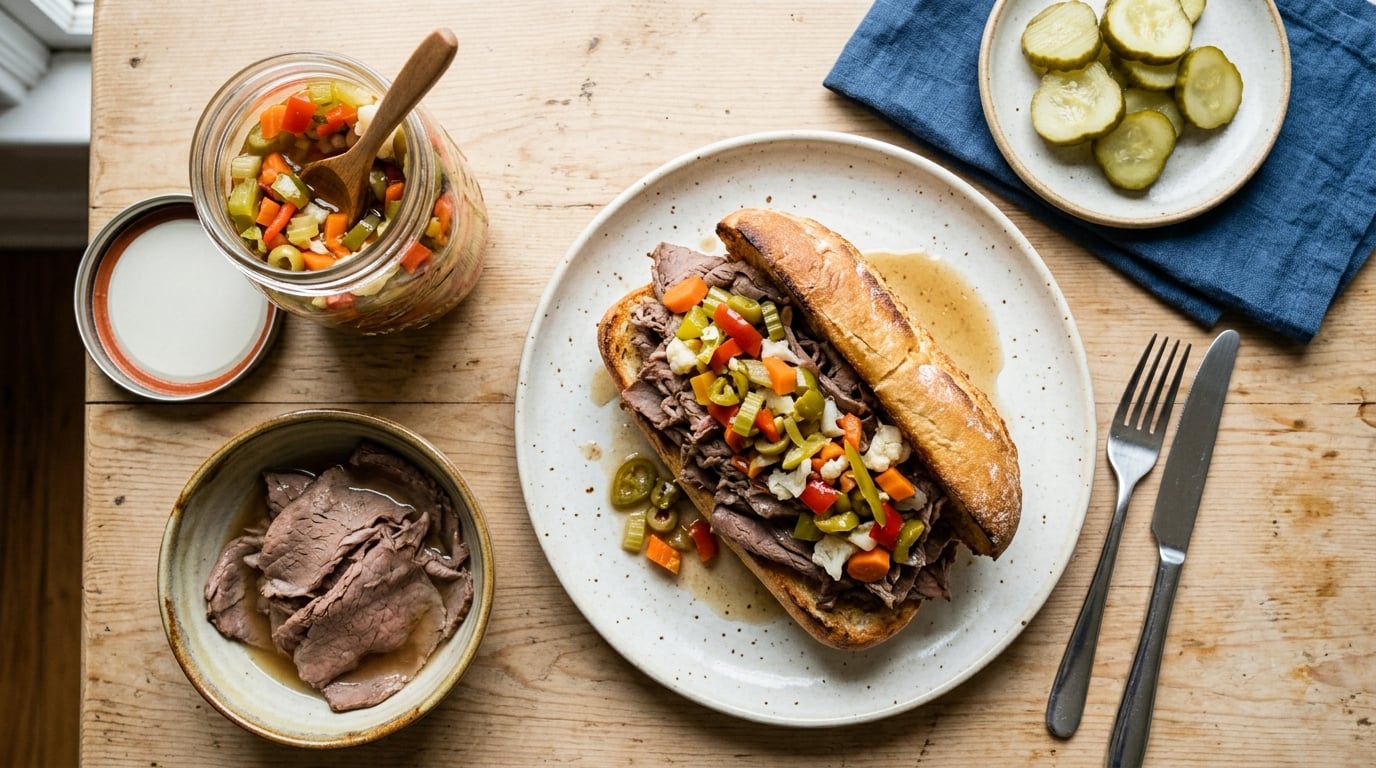
The best store-bought giardiniera for Italian beef is a hot, oil-packed jar with a coarse vegetable chop and enough vinegar to cut through fatty roast beef. It should arrive crunchy, not soft, and it should taste seasoned rather than merely sour.
Giardiniera is the pickled pepper-and-vegetable relish that turns a pile of beef on a hoagie roll into a Chicago Italian beef. The same jar works on a cold Italian sub, on a pizza, or in a pasta salad, which is why it earns a permanent spot in the fridge of a sandwich shop like ours.
I grew up eating sandwiches built on whatever jar was on hand, and the mistake almost everyone makes first is treating giardiniera like a jar of plain pickles. It is not a side dish. It is the acid, the heat, and the crunch that balance a sandwich, so picking the right jar matters more than the price on the label.
Below are ten picks, from named hot Chicago-style jars to the mild options and the label details worth checking in whatever grocery store is nearest you. Brands like Marconi, J.P. Graziano, Vienna, Mezzetta, DeLallo and Partanna come up constantly in reader conversations about which jar is worth buying, and several of them appear below in context.
Table of Contents
- Best Store-Bought Giardiniera for Italian Beef and Subs at a Glance
- 1. Castellani Giardiniera
- 2. DeNigris Giardiniera
- 3. Mama Maria’s Giardiniera
- 4. Girardinella Giardiniera
- 5. Tony’s Giardiniera
- 6. Generic Grocery-Store Giardiniera
- 7. Deli-Counter Giardiniera
- 8. Mild Giardiniera
- 9. Hot or Spicy Giardiniera
- 10. Giardiniera with Extra Vegetables
- How to Choose Giardiniera for Sandwiches
- Frequently Asked Questions
- Should giardiniera be drained before putting it on an Italian beef sandwich?
- What is the best giardiniera for Italian beef or roast beef sandwiches?
- Is giardiniera supposed to be spicy or hot?
- Can giardiniera be heated before adding it to a sandwich?
- How long does opened giardiniera last in the refrigerator?
- Can I use giardiniera on a cold Italian sub?
- Conclusion
Best Store-Bought Giardiniera for Italian Beef and Subs at a Glance
This table sorts the ten picks by the traits that decide whether a jar works on a sandwich: flavor direction, chop size, heat, the sandwich it suits best, and its usual price tier.
| Pick | Flavor profile | Texture | Heat | Best sandwich use | Price tier |
|---|---|---|---|---|---|
| 1. Castellani | Vinegar-forward, jarred Chicago-style | Coarse chop, firm bite | Hot | Italian beef | Mid |
| 2. DeNigris | Sweet-to-sour balance | Mixed dice | Mild to medium | Cold Italian subs | Mid |
| 3. Mama Maria’s | Brined, savory, familiar | Small even dice | Medium | Beef, sausage and cold cuts | Budget |
| 4. Girardinella | Vegetable-forward, sharp vinegar | Crisp mixed vegetables | Medium | Roast beef and cold cuts | Mid |
| 5. Tony’s | Intense, oil-forward | Chunky pieces | Medium to hot | Hot subs | Mid |
| 6. Grocery-store jars | Varies widely by label | Check the cut on the label | Usually medium | Everyday sandwiches | Budget |
| 7. Deli-counter | Freshest, most controlled brine | Crisp, freshly cut | Ask the counter | Party batches of sandwiches | Premium |
| 8. Mild jars | Vinegar without chili | Fine to medium dice | Mild | Kids, guests, cold subs | Mid |
| 9. Hot jars | Pepper-forward, assertive | Firm vegetables | Hot | Dipped Italian beef | Mid |
| 10. Extra-vegetable jars | More pickle, more brine | Cauliflower and carrot heavy | Medium | Pizza, pasta salad, antipasto | Mid |
1. Castellani Giardiniera
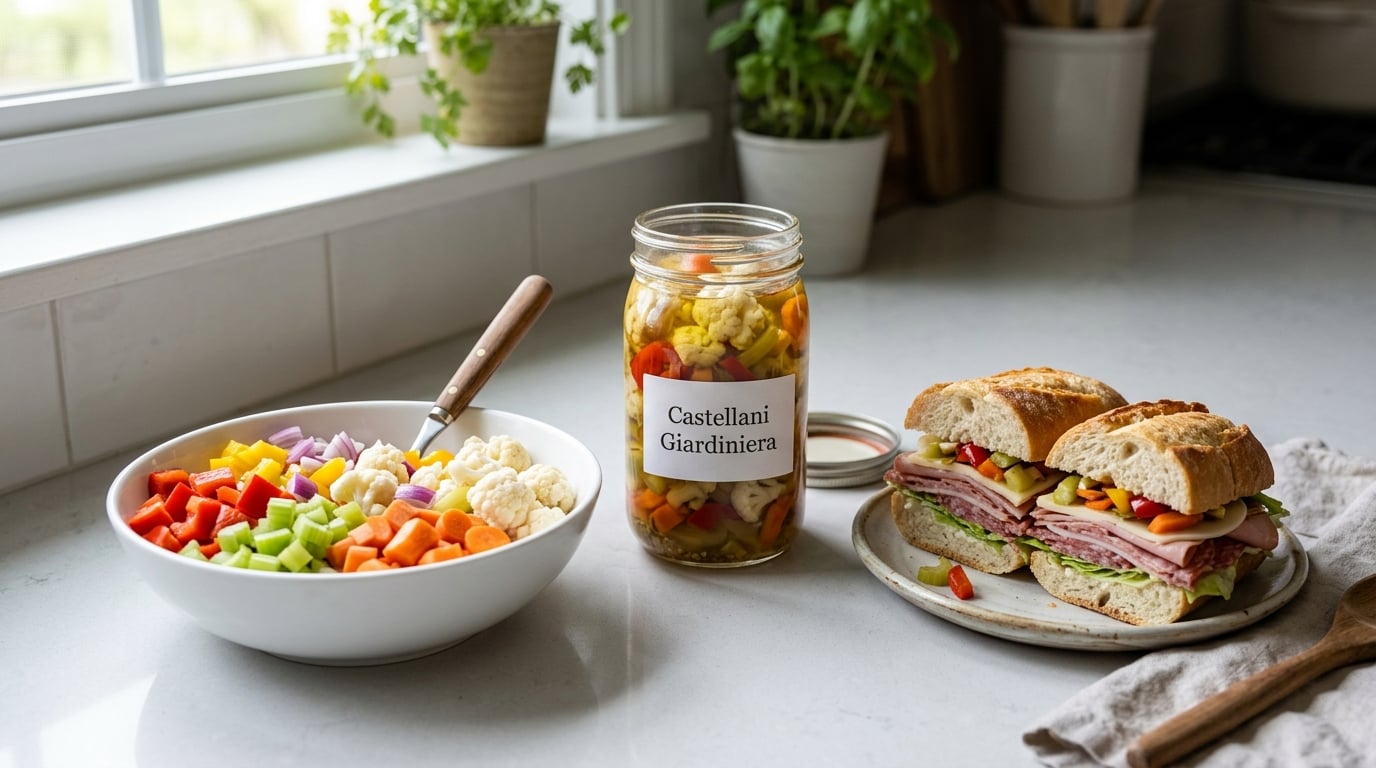
Castellani is the jar to buy when you want a hot, vinegar-forward Chicago-style relish that can stand up to a warm sandwich without turning mushy.
The chop is coarse, which matters more than it sounds. Coarse pieces keep a distinct crunch through a steam bath, and a sandwich eaten over a plate catches the loose oil and vinegar that a fine dice would have soaked into the bread.
The vinegar note is assertive, and that is the point on Italian beef. Roast beef rendered fat needs something sharp to push back against, and a jar that tastes mostly of pickle brine is doing exactly the job a Chicago sandwich expects.
After warming, the peppers soften and the heat spreads through the whole bite instead of hitting in one spot, which is the behavior you want on a dipped sandwich. Portion it with a slotted spoon so the sandwich is flavored without being waterlogged.
2. DeNigris Giardiniera
DeNigris lands in the middle of the heat range, and its sweet-to-sour balance makes it the safer pick for a cold Italian sub.
Cold subs fail when the topping fights the deli meat. This jar leans sweet enough to sit under salami and provolone, and the peppers give a slow warmth that builds up over a few bites rather than landing immediately.
On a hot Italian beef it works too, though the flavor reads milder once the meat’s heat and the au jus are in the mix. If your household splits on heat, this is the jar to keep within reach of both kinds of sandwich.
One practical note: spoon it on after the meat, not before, when you are building a cold sub. The salt in cured meat plus a full helping of brined vegetables is a lot of salt in one mouthful.
3. Mama Maria’s Giardiniera
Mama Maria’s is the grocery-jar default, and for readers who want one dependable jar that handles several sandwich styles, it does the job without fuss.
The vegetables are cut into small, even dice, so the texture stays consistent from spoonful to spoonful. Seasoning leans savory and brined rather than sharply sour, which makes it a quieter topping that does not argue with the meat.
It performs across a whole menu: Italian beef, sausage sandwiches, chopped cold cuts, and a meatball sub where the relish is a bright counterweight to the tomato sauce.
Because the dice is small, drain it well and use a light hand on a large sandwich. Two tablespoons is usually plenty on a long roll, and a heavier pour tends to slide out the moment you pick the sandwich up.
4. Girardinella Giardiniera
Girardinella is the vegetable-forward option, built around cauliflower, carrots, celery, onion and peppers with a sharper vinegar profile than most jars in this range.
That sharpness is the deciding factor on roast beef. Thinly sliced cold beef has no fat to cut through, so it needs more acid than a hot sandwich does, and this jar supplies it without leaning on chili for the flavor.
On a hot Italian beef, the extra vinegar reads as brightness rather than sourness, particularly if you drain the brine and let the meat’s own juices do part of the work.
It is also the one I reach for on an antipasto platter or a chopped salad, where the vegetable content carries the dish on its own. Two or three pieces of cauliflower per spoonful give it a hearty, almost salad-like presence.
5. Tony’s Giardiniera
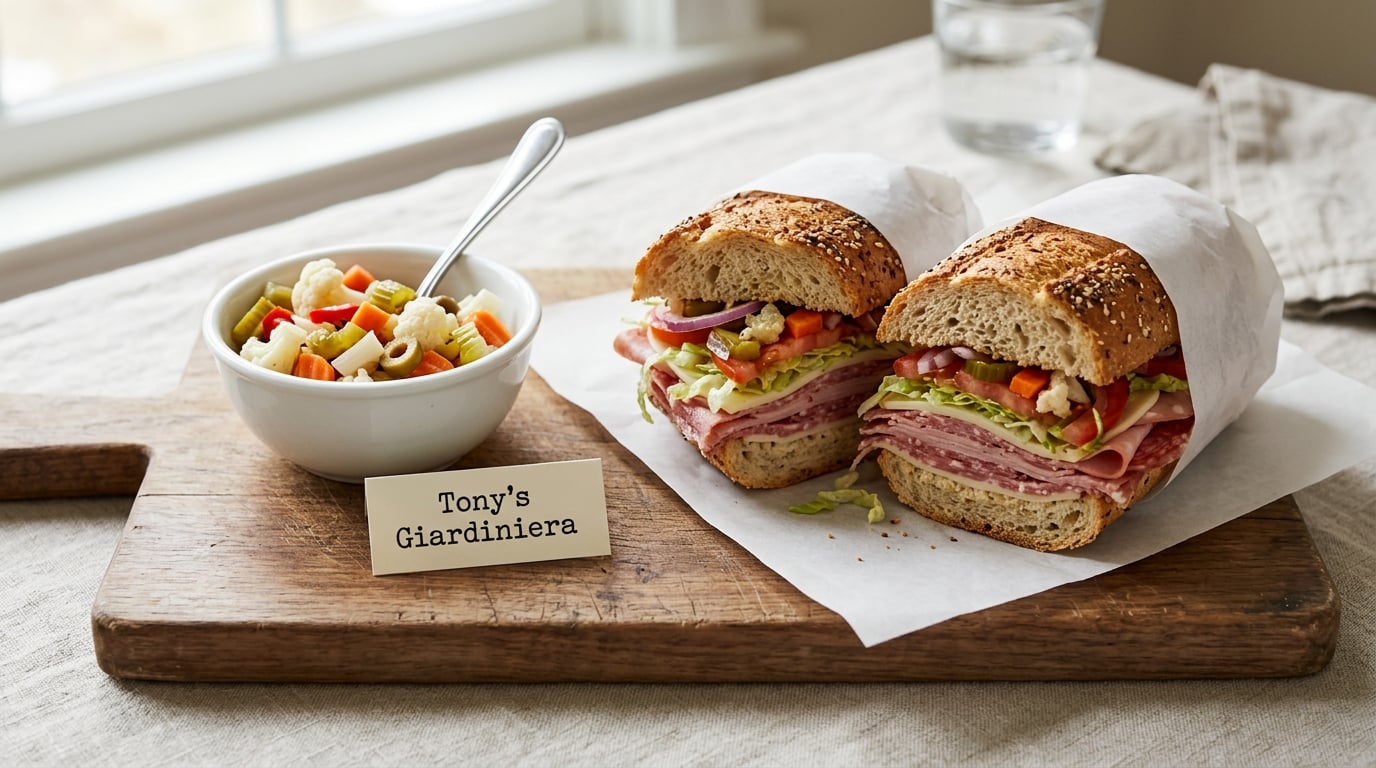
Tony’s is the flavor-forward pick, and it is the one to reach for when the relish is meant to be noticed rather than blended in.
The profile is oil-forward and intense, with a chunky piece size that keeps a strong crunch through a warm roll. That intensity is why it suits people who like their giardiniera to announce itself, and why it can overpower a thin deli sub if you overdo it.
Draining matters more here than with any other jar. Tip the serving into a slotted spoon or a strainer and let it sit for a minute, then add it in a thin layer along the length of the sub.
Then close the sandwich and eat it right away. The oil migrates into the bread quickly, and a sub that sits open for ten minutes will have a soft, damp patch exactly where the relish sits.
On a dipped Italian beef, the same restraint pays off. The bread is already soaked, so extra liquid from the relish is one variable you do not need.
6. Generic Grocery-Store Giardiniera
Most store-brand jars are perfectly good, and the label tells you almost everything you need to know before you open the lid.
Start with the cut. A fine dice spreads evenly and suits a sub, a coarse chop keeps a crunchier bite and stands up to heat. Jars that list whole slices rather than chopped pieces are often styled for an antipasto platter rather than a sandwich.
Next, read the brine. If the ingredient list opens with a long list of vegetables and includes vinegar, you are looking at a vinegar-packed jar, which is sharper. If it opens with oil, expect a rounder, more savory flavor that coats the meat instead of cutting it.
Watch for sweeteners in the list too. A little sugar softens the acidity and makes a jar friendlier to people who dislike plain pickle brine, though it can flatten the flavor on a very hot sandwich.
Finally, check the pepper type and the total quantity by weight, not by jar size. Two jars that look identical on the shelf can hold noticeably different amounts of vegetables, and that difference shows up in cost per sandwich after four or five uses.
7. Deli-Counter Giardiniera
Deli-counter giardiniera is the best option when you are building a large batch, and the reason is brine control rather than flavor.
Counter versions are cut and seasoned in smaller quantities, so the pieces stay crisp and the vinegar is balanced for eating right away. Shelf-stable jars are formulated to travel and to sit in a pantry, which usually means the vegetables are slightly softer and the brine a little more assertive.
Ask the counter how long their batch was made and whether it was packed in oil or vinegar. Those two answers explain almost any difference you notice in the first bite.
For a party batch of sandwiches, deli giardiniera also scales better. A jar is a fixed amount, and once it runs out mid-party the sandwiches lose the balance they were built around, while a counter batch can be replenished.
One thing to confirm before you buy: not every Italian deli counter sells giardiniera, and the ones that do may only have hot batches. If you are feeding guests with varied heat tolerance, ask first.
8. Mild Giardiniera
Mild giardiniera is the pick for kids, guests who do not eat hot peppers, and anyone who wants the pickled vegetable and vinegar flavor with no chili at all.
Mezzetta’s Italian Mix Mild comes up often in reader recommendations as a national-brand mild option, and DeLallo’s mild Chicago-style jar gets praise for balance. Marconi is widely available in Chicago-area supermarkets and is a common mild-leaning choice for people who want the pickle flavor without a chili bite.
Mild does not mean bland, but the flavor leans toward carrots, cauliflower and celery with vinegar doing all the work. On a sandwich, that reads as a pickled slaw, which suits cold cuts and vegetarian sandwiches particularly well.
If you want heat in a mild jar, add it at the sandwich instead of in the jar. Spoon a few sliced hot pepper rings or a small pour of the hot variety onto one side of the sandwich, and each person controls their own level.
Doing it that way also keeps a single jar working for a mixed group, which matters more than most people expect when they are feeding a table.
9. Hot or Spicy Giardiniera
Hot giardiniera is the traditional choice for a dipped Italian beef, and it is where the Chicago-style label earns its keep.
J.P. Graziano’s hot jar is described by readers as seriously hot, with a heat level that builds over several bites rather than announcing itself immediately. That persistence is what gives a hot sandwich its slow burn, and it is why the flavor is considered worth the intensity.
Heat also changes when the sandwich is warmed. Warmth releases more of the pepper oils, so a jar that tastes medium straight from the spoon can taste considerably hotter after a trip through a steamer.
Serve hot giardiniera on a single layer along the meat rather than in a thick scoop. The heat distributes more evenly that way, and the sandwich keeps its structure instead of turning into a hot, wet pile at the center.
Pairing it with a crumbly aged cheese rather than a mild provolone also helps. The sharper cheese stands up to the pepper, and a little sharp flavor on the bread keeps the whole bite in balance.
10. Giardiniera with Extra Vegetables
Extra-vegetable jars trade some pepper intensity for a much higher proportion of cauliflower, carrot, celery and onion, and they are the pick if you want a vegetable-forward topping.
The tradeoff is texture. A denser vegetable mix has more pieces competing for the same amount of liquid, so some soften faster and the mix can turn a little mushy a couple of hours after opening.
The brine runs stronger for the same reason. With more vegetables absorbing vinegar, the liquid picks up more vegetable flavor and can taste more assertive after a day or two in the fridge.
These jars earn their keep outside the sandwich. Spooned over a pizza with a thin layer of cheese, folded into a pasta salad, or arranged on an antipasto platter with olives and cured meats, they do work that a hotter, smaller-batch jar cannot.
For sandwich use, drain these longer than you would drain a hot jar. A few minutes in a strainer keeps the vegetable flavor and loses the excess brine.
How to Choose Giardiniera for Sandwiches
What makes the best store-bought giardiniera for Italian beef?
Crunch, vinegar acidity, and a pepper note that arrives after the vegetables. If a jar is soft in the jar, it will be softer on the sandwich, and if the flavor is mostly pickle brine, the meat will taste washed out.
Oil-packed versus water-packed matters too. Oil carries flavor and coats the meat, which suits a hot sandwich, while a sharper vinegar-packed jar cuts through fat and works better on cold cuts and thin roast beef.
How to control moisture on a hot sub
Drain, portion lightly, and eat promptly. A slotted spoon plus a one-minute rest in the strainer removes the loose liquid that turns bread into a damp patch, and a thin layer spreads the flavor across the whole sub instead of pooling it in the middle.
Warming the relish gently rather than steaming it hard also helps. You want the oil warm, not the vegetables soft.
Storing giardiniera after you open the jar
Refrigerate the jar, use a clean utensil each time, and press the vegetables down so the oil covers them. A jar opened and left on a counter picks up bacteria from repeated spoon contact, and submerged vegetables stay fresher than ones sitting above the oil line.
Glass jars are heavy, so if you are not sure whether a spoon went in, buying a new one is the safer call. A cloudy or fizzy appearance in the oil, or a smell that turns sharp rather than sour, is a sign to discard the contents.
Frequently Asked Questions
Should giardiniera be drained before putting it on an Italian beef sandwich?
Yes, especially for a hot sub. Spooning it through a slotted spoon or a strainer lets the loose brine drain off and keeps the roll from turning damp in the center. For a cold sub you can use a lighter hand, but draining still improves the texture. A minute in the strainer is usually enough.
What is the best giardiniera for Italian beef or roast beef sandwiches?
For a hot Italian beef, a hot oil-packed Chicago-style jar with a coarse chop and real vinegar acidity is the best choice, since it stays crunchy through steam and cuts through the fat. For cold roast beef, a vegetable-forward jar with sharper vinegar works better because thin cold meat has no fat to cut. Marconi, J.P. Graziano and Vienna are frequently recommended names worth checking in your area.
Is giardiniera supposed to be spicy or hot?
It depends on the style. Chicago-style giardiniera leans hot and oily, and J.P. Graziano’s hot jar is often described as seriously hot by people who eat it regularly. Italian-style giardiniera is usually milder and more vinegar-forward. Both styles are normal, so buy the heat level that matches the people eating the sandwich.
Can giardiniera be heated before adding it to a sandwich?
Yes, and it changes the flavor. Warming releases more pepper oil, so a jar that tastes medium from the spoon can read hotter after it is warmed, and the vinegar becomes rounder. Warm it gently if you can, rather than steaming it hard, and drain it afterward so the bread stays dry.
How long does opened giardiniera last in the refrigerator?
Keep it refrigerated with a clean utensil and the vegetables submerged under the oil, and it stays good for several weeks. A jar left on the counter with a spoon in it picks up bacteria and does not keep as well. If the oil looks cloudy or fizzy, or the smell turns sharply unpleasant, discard the jar rather than tasting it.
Can I use giardiniera on a cold Italian sub?
Yes, and it is one of its best uses. A vinegar-forward jar with a fine or medium dice sits well under salami, ham and provolone without fighting the cured meat. Portion lightly because the salt from the deli meat and the brined vegetables add up quickly, and add the relish after the meat so it stays on top of the sandwich.
Conclusion
The best store-bought giardiniera for Italian beef is a hot, oil-packed Chicago-style jar with a coarse chop, real vinegar acidity and a pepper note that builds rather than blasts. Start there, drain the serving well, and add it in a thin layer over the meat.
For a mild option, pick a vinegar-forward jar such as a Mezzetta or DeLallo mild, or start with mild and add sliced hot peppers on the side so each person controls the heat. For the hottest version, go with a J.P. Graziano hot or Vienna Beef jar and expect a slow burn that intensifies once the sandwich is warmed.
Whichever jar you choose, the first step before building the sandwich is the same: drain the giardiniera, not the au jus. That one habit fixes more soggy Italian beefs than any brand decision.