
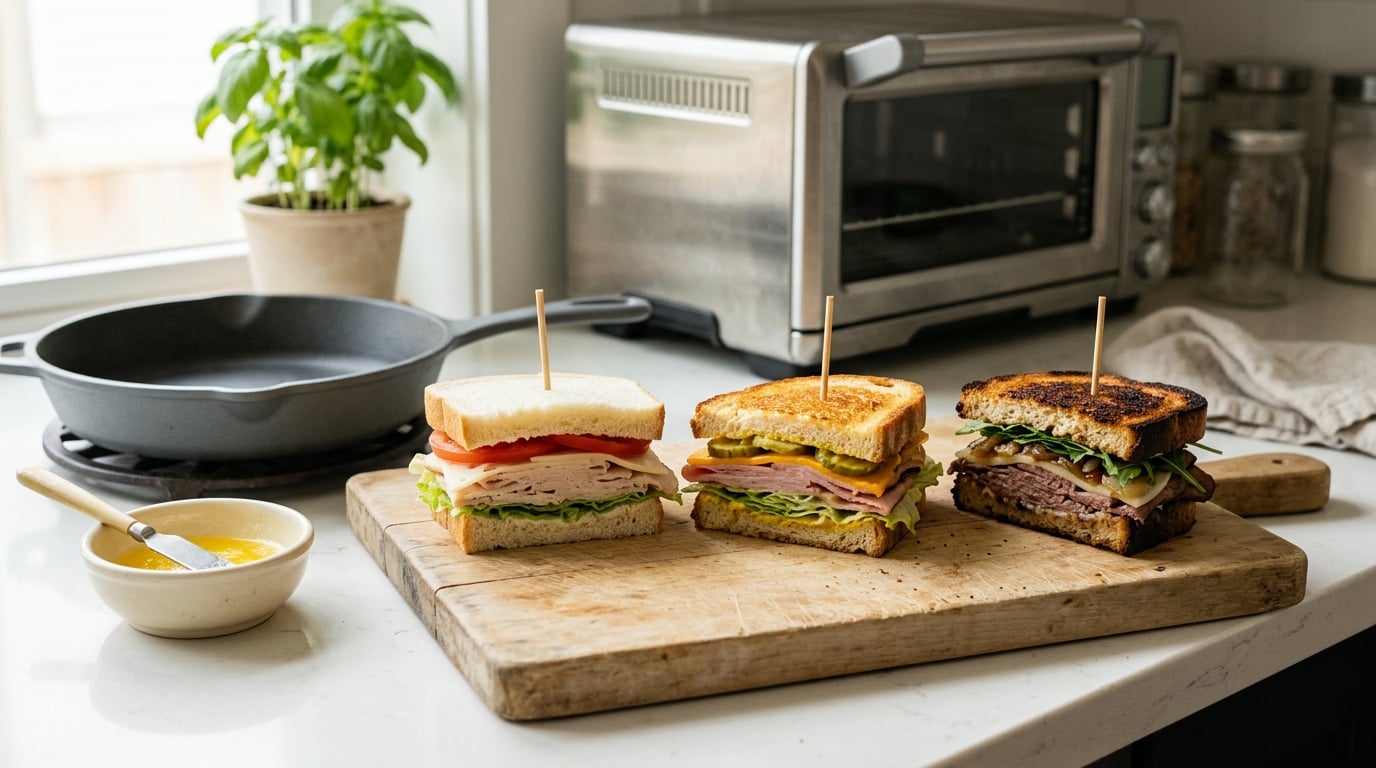
Whether you should toast bread for a deli sandwich comes down to the bread and the filling. Toast sturdy, dense bread for crunch and structure, and leave soft, airy bread alone when a crisp exterior would fight with the filling. The exceptions are wet fillings and delicate loaves, and those are where the real judgment sits.
I’ve built a lot of cold cut sandwiches in a small kitchen, and the toasted-versus-untoasted argument is the one that comes up every single time. Both camps are right about something, which is why the question keeps coming back.
Table of Contents
- Should You Toast Bread for a Deli Sandwich? The Short Answer
- What Does Toasting Change About a Deli Sandwich?
- How to Choose: A Deli Sandwich Toasting Guide
- When Toasting Helps a Deli Sandwich
- When Toasting Hurts a Deli Sandwich
- Which Sandwiches Toast Best?
- How to Toast Deli Sandwich Bread Without Ruining It
- How Much Toasting Is Enough?
- Frequently Asked Questions
- Should you toast bread for a deli sandwich made with turkey and Swiss?
- Is a toasted deli sandwich better than an untoasted one?
- Will a toasted sandwich stay crisp if you wrap it for lunch?
- What toaster oven setting is best for sandwich bread?
- Should you butter bread before toasting a sandwich?
- Does toasting bread change the shelf life of a deli sandwich?
- Conclusion: Start with the Bread and Filling
Should You Toast Bread for a Deli Sandwich? The Short Answer
Toast sturdy, dense bread when the sandwich is loaded, wet, or needs to survive holding and wrapping. Skip the toaster for soft white bread carrying cold deli meat and a slice of cheese, eaten straight away. Two exceptions matter most: wet fillings want a toasted moisture barrier, and delicate breads like brioche burn before they crisp.
That is the whole rule. Everything below is just the reasoning underneath it, plus the technique for getting a light toast instead of a scorched one.
What Does Toasting Change About a Deli Sandwich?
Dry heat pushes water out of the outer layers of the crumb and sets the starches there. What you end up with is a thin firmer shell that takes up moisture far more slowly than raw bread does.
That shell is the moisture barrier, and it is the single most useful thing toasting does. Tomato juice, pickle brine, tuna, egg salad and mayo have to work much harder to soak through toasted bread, which is why a crisp slice survives a wet sandwich where a soft one collapses.
Three other changes come along with it. The bread gets structural integrity, so a thick sandwich will not squish out its filling. Browning adds a nuttier aroma through the Maillard reaction, which is a genuine flavor gain and not just a textural one. And if the cheese is in the sandwich, a little heat softens the slice so it bends instead of snapping.
Toasting is not a health move. A toasted slice of white bread has the same calories and the same sodium as the untoasted one; you have not changed the sandwich, only its surface.
Push the heat too far and the same mechanism works against you. Over-baked bread loses the moisture that was still in the middle, so it goes tough and dry rather than crisp, and the roof of your mouth pays for it.
How to Choose: A Deli Sandwich Toasting Guide
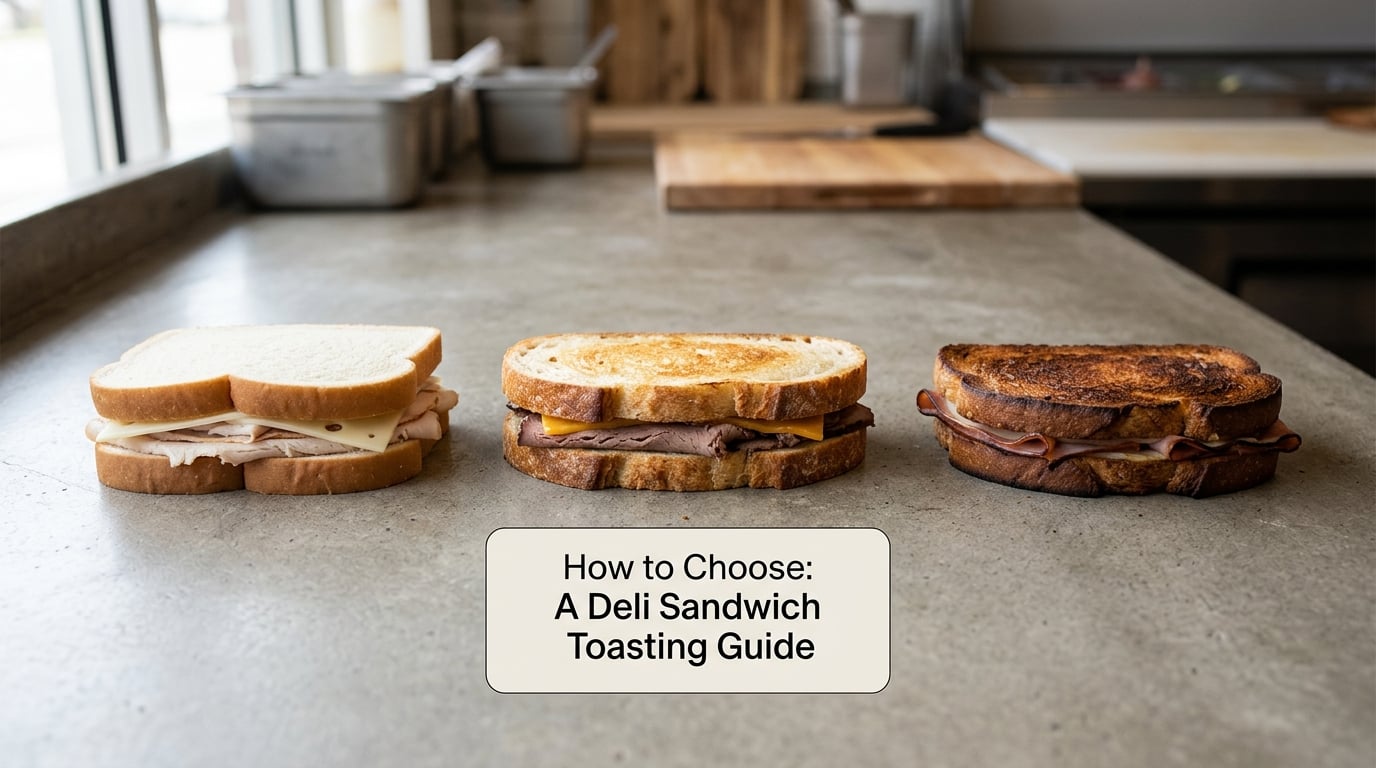
Work down the filling column first, then check the bread. If the two disagree, the filling wins, because moisture is harder to fix than crunch.
| Sandwich or filling | Best call | Why |
|---|---|---|
| Turkey and Swiss on soft white | Do not toast | Lean meat, mild cheese, nothing wet to block; the soft crumb compresses nicely |
| Turkey and Swiss on rye or sourdough | Light toast | Sturdy bread can take heat, and the moisture barrier helps with the mayo |
| Ham and cheese | Light toast | Enough structure for a thick stack, mild enough that crunch does not take over |
| BLT | Toast the inner face only | The tomato is the problem; the outer face stays soft so the sandwich still eats tender |
| Roast beef with cheese | Light toast | Juicy meat makes a stack that needs support, and the bread stands up to the drip |
| Tuna, egg salad, chicken salad | Toast, then cool before wrapping | These fillings are wet enough to soak through untoasted bread within an hour |
| Club sandwich | Light toast on sturdy bread only | Three layers of toast plus a soft roll is a lot of crunch; skip it on a white roll |
| Grilled vegetable or portobello | Full toast | Vegetable slices release water and press into the bread if the crumb is soft |
| Reuben with sauerkraut | Toast the inner face only | Sauerkraut wicks brine straight to the crust; the untoasted outside keeps the bite from becoming hard |
| Peanut butter or plain nut butter | Do not toast | Dry filling, no structural problem to solve, and the nut flavor is better without browning |
| Sandwich packed for later | Usually do not toast | Toast softens again in a sealed wrap faster than most people expect |
| Thin soft white bread, any filling | Watch it closely | It browns in under two minutes and goes from pale to burnt without a middle stage |
If you only want one compromise, toast the inner face of each slice and leave the outer face raw. That is the move a BLT thread on r/Sandwiches settled on: the toasted side becomes a barrier against the filling, and the first thing your teeth touch is still soft bread.
When Toasting Helps a Deli Sandwich
Sturdy bread is the first case. Sourdough, ciabatta, rye, pumpernickel, a potato roll or a thick-cut country white all have enough density to crisp without collapsing. Soft sandwich bread is the opposite case, and it is where most disappointing toasts happen.
Wet or loose fillings are the second case, and they are the strongest argument for toasting. A sandwich built around tomato, cucumber, pickles, sauerkraut, tuna, egg salad or a heavy mayo spread is asking to leak. A toasted inner face slows that down noticeably.
Sandwiches that have to be held or wrapped are the third. A deli order that travels a block, a lunch that gets wrapped in parchment, a sub assembled for a party, all of them hold their shape better with a firmer shell.
Hot or room-temperature meat and cheese benefit too. Toast the bread first, let it sit a minute, and room-temperature filling lands on a warm slice instead of turning the bread cold and damp in thirty seconds.
Finally, there is plain preference. If you want a crisp-chew contrast against something soft in the middle, a light toast delivers it. There is nothing wrong with wanting crunch.
When Toasting Hurts a Deli Sandwich
The biggest loss is the soft crumb itself. One r/Sandwiches commenter put it plainly: they dislike toasted bread because untoasted bread gets pressed down and becomes one with the ingredients. That fusion is real, and on a thin-sliced roast beef or turkey and Swiss sandwich it is the better sandwich.
Then there is over-crisping. A firmly toasted slice has nothing left to give, so each bite registers as crunch rather than chew, and the filling seems quieter by comparison.
Dryness is the quiet problem. Lean deli meat, fresh mozzarella, ricotta and cottage cheese all carry very little fat, so a toasted slice pulls the only moisture in the sandwich out of the filling. A grilled-cheddar melt is a different animal, but cold turkey on a hot slice is a step toward cardboard.
Wet fillings create their own failure. Toast the bread, assemble the sandwich, and the moisture already in the filling starts softening the toasted face from the inside while the outside keeps crisping. Halfway through the sandwich you get a soggy middle with a crackly edge, which is worse than either extreme.
Butter or oil on the outside can take over as well. A browned, buttery crust has its own flavor profile, and it competes with delicate fillings like plain turkey, cucumber and cream cheese rather than supporting them.
And toasted bread does not stay toasted. Wrapped while hot, it steams itself soft within minutes, which is why packing advice keeps converging on cooling the toast first.
Which Sandwiches Toast Best?
Should you toast bread for a deli sandwich made with turkey and Swiss?
On soft white bread, no. Turkey and Swiss is a dry, mild, thinly sliced combination, and it is at its best when the bread stays tender and slightly compressible. Toast it and you mostly add crunch to a sandwich that did not need structural help.
On rye or sourdough, go ahead with a light toast. Those breads are sturdy enough to take it, and the barrier helps with any mayo or mustard you are using. Keep the toast pale and watch the clock, because the cheese underneath is thin and will not tell you when the bread is done.
Ham and cheese
This one is genuinely flexible. A light toast on almost any bread works, since ham and cheese are both sturdy enough not to dry out and there is usually enough of each to justify the structure. Go heavier on rye than you would on white, and skip it entirely on a soft milk bread roll.
BLT
Toast the inner face only, or skip it. The tomato is the deciding factor, and bacon already supplies plenty of salt and fat, so a fully toasted version can read as too heavy. If you want more protection against the juice, add a barrier instead: a thin slice of lettuce, a sprinkle of salt on the tomato, or a line of mayo on the bread, which most sandwich people do already.
Club sandwiches
Light toast on bread that can handle it, no toast on a soft roll. A club is three slices of bread, so a full toast turns the whole thing into a crunch object and you lose the layer of texture that makes a club different from a stack. The middle slice especially suffers.
Roast beef
Light toast, and toast the bread before assembly. Roast beef is a heavy, wet, salty stack, and soft bread gives out under it. Toasting first gets you a shell that holds, and letting the toast cool for a minute keeps the meat from steaming the bread back to softness.
Tuna and other salad fillings
Toast, then cool completely before wrapping. Tuna, egg salad and chicken salad hold a lot of water, and untoasted bread gives up within an hour. Toast, cool on a rack for a few minutes, then assemble and eat promptly. If it has to travel, a toasted sandwich will eat more like a warm deli sandwich than the skillet-crisp version, which is a reasonable trade for a lunchbox.
Vegetarian and vegetable sandwiches
Toast generously. Roasted peppers, tomato, cucumber and mushrooms all release water under pressure, and a crisp surface is the best defense. Vegetarian sandwiches also tend to be on the drier side, so a fuller toast works in your favor here rather than against you.
How to Toast Deli Sandwich Bread Without Ruining It
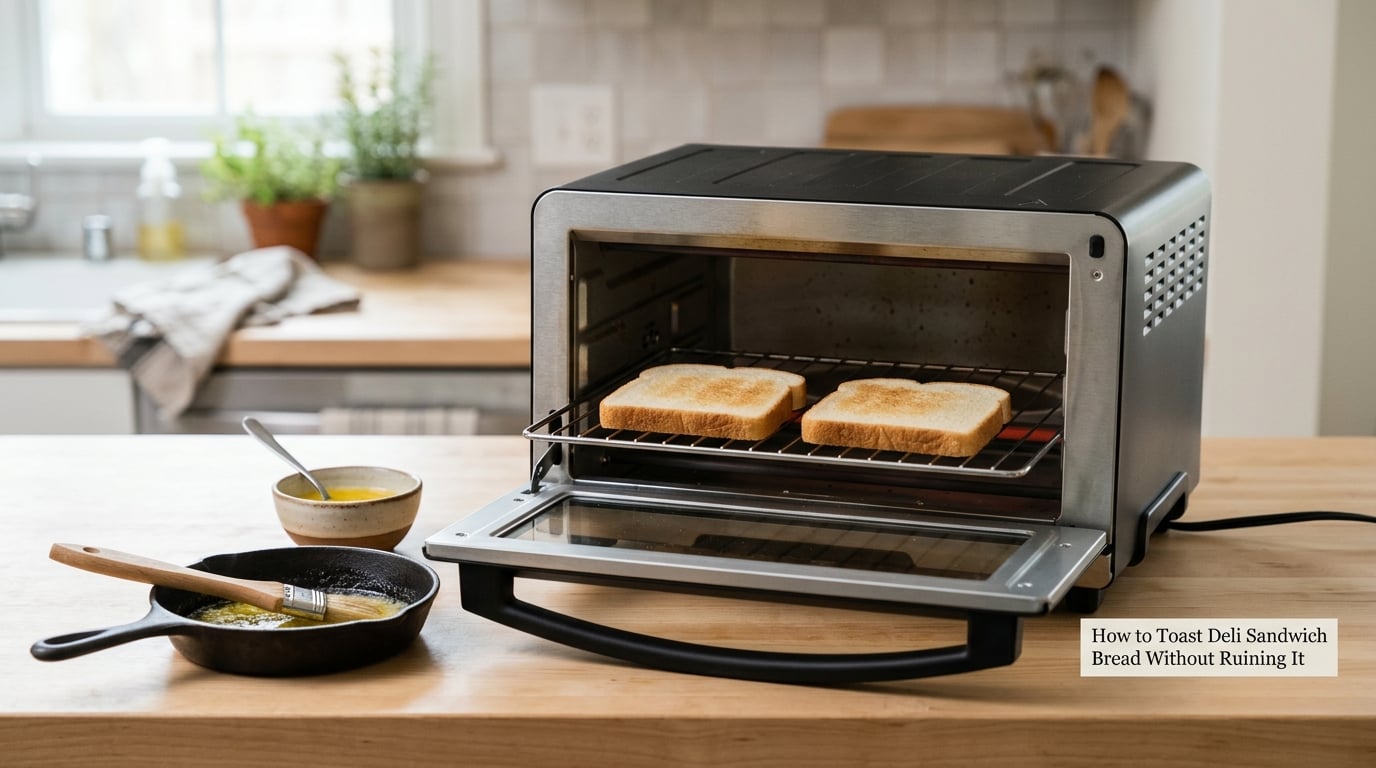
Pick the method that matches how much bread you are doing. A toaster oven is the most forgiving, a skillet is the fastest, and a conventional oven is the one you use when you are making four sandwiches at once.
| Method | Heat | Time | Best for |
|---|---|---|---|
| Toaster oven | 350 to 375 F, middle rack | 4 to 6 minutes, flip at 3 | One or two slices, most even browning |
| Skillet | Medium-low, lightly oiled | 2 to 3 minutes per side | A single slice or a closed sandwich, fastest option |
| Panini press | Medium, no added fat needed | 3 to 4 minutes total | Thick closed sandwiches, gives grill marks and a press |
| Conventional oven | 375 F, middle rack | 8 to 10 minutes, flip at 5 | Several slices or whole sandwiches at once |
| Broiler | High, watch constantly | 1 to 2 minutes | Open-faced builds, where you want the cheese blistered |
| Air fryer | 375 F | 3 to 4 minutes | One or two slices, good crust with less oil |
Toaster oven, step by step
Set the toaster oven to 350 or 375 F and put the rack in the middle. Lightly oil or butter the outside of each slice if you want browning, or leave them plain for a cleaner flavor.
Lay the slices on the rack with space between them so hot air can move around them. Set the timer for four to six minutes and stay nearby, because soft white bread can go from pale to black in under a minute once it starts to color.
Flip at the halfway mark. You are looking for pale gold with a dry surface and a firm feel when you lift a slice; if the center still looks damp or spongy, give it another minute rather than reaching for a darker color.
Cool the toast on a rack for two or three minutes before you assemble. Wrapping bread while it is still giving off steam is the fastest way to turn a good toast back into a soft slice, and the advice from sandwich packers is consistent on this point.
Skip the butter unless you want that flavor. Mayonnaise or oil on the outside browns better and has a higher smoke point than butter, which helps in a skillet, but on a deli sandwich the plain toast is usually the more neutral choice.
Skillet and panini press
Heat a skillet over medium-low and add a thin film of oil. Lay the slice in and give it two to three minutes, then check the underside before turning. Soft bread at this heat is the whole game; push it higher and the outside scorches before the middle firms.
For a panini press, medium heat and three to four minutes gives you grill marks and a compressed edge without drying the crumb. Weight the sandwich with a second pan if you do not have a press, and keep the filling thin so nothing squeezes out.
Keeping a toasted sandwich from going soggy
Drain wet ingredients. Blot the tomato or cucumber, drain the pickles, and keep tuna and egg salad on the drier side of saucy.
Put condiments on the fillings, not on the bread. Mayo on a slice of meat or lettuce does the same job as a layer of protection without soaking straight into the crumb.
Toast the inner face if the filling is wet, and leave the outer face alone. You get the barrier and keep the tender bite.
Let hot toast cool on a rack before wrapping it. Trapped steam is what turns a crisp slice into a limp one.
Wrap for support, not compression. Paper or parchment breathes better than foil, and a loose wrap keeps support without pressing the sandwich into a brick.
Eat promptly if you can. Toasting buys you time, not immunity.
One food-safety note, since toasting means heat near cold cuts. USDA guidance for reheating lunch meat and deli meat is an internal temperature of 165 F, and pregnant people, older adults, young children and anyone with a weakened immune system should treat that as the floor, not the suggestion. Dry or wet, the meat still needs to reach temperature.
How Much Toasting Is Enough?
Judge by what you see, not by a clock, because slice thickness changes everything. Two thin slices of white bread and a thick-cut country white can differ by several minutes under the same heat.
The cues are consistent. The surface should look dry rather than slightly damp and translucent. The color should be pale gold on white bread, a shade deeper on sourdough, and only lightly colored on rye, which goes hard rather than crisp if you push it. Lift a corner and press it: it should resist without feeling like cardboard.
If the center still looks spongy and cool, it needs more time, not more color. If the crust has gone deep brown and the slice feels rigid, you have passed the point where moisture is still inside, and the sandwich will taste dry from the first bite.
One more thing to check: the roof-of-the-mouth burn. Thick slices toasted hard are the usual culprit, and the fix is a gentler heat and more time rather than a stronger setting.
Frequently Asked Questions
Should you toast bread for a deli sandwich made with turkey and Swiss?
On soft white bread, skip it. Turkey and Swiss is dry, mild and thinly sliced, so the sandwich is at its best when the crumb stays tender and compresses with the bite. On rye or sourdough, a light toast works well, because those breads are sturdy enough to take the heat and the crisped surface helps with any mayo. Either way, keep the toast pale and stop before the cheese underneath burns.
Is a toasted deli sandwich better than an untoasted one?
It depends on what you want from the bread. Toasting gives you crispness, aroma and a moisture barrier that holds up against wet fillings. It costs you the soft crumb that compresses and fuses with the filling, which many sandwich people prefer. For a thick, wet or travel-ready sandwich the toasted version usually wins; for a thin, dry cold cut sandwich eaten immediately, the untoasted one does.
Will a toasted sandwich stay crisp if you wrap it for lunch?
Not for long if you wrap it hot. Toast gives off steam for several minutes after it leaves the heat, and trapped steam softens the crust faster than almost anything else. Let the slices cool on a rack for two or three minutes, wrap loosely in paper or parchment rather than foil, and pack the sandwich with a cold pack. Expect it to soften somewhat by midday and accept that as the trade.
What toaster oven setting is best for sandwich bread?
Use 350 to 375 F with the rack in the middle, and check at four minutes. Soft white bread reaches the right color in four to five minutes, so stay close once the first edges start to brown. Thick-cut country white and sourdough can take six. You want pale gold with a dry surface; if it is still spongy in the middle, add another minute rather than extra color.
Should you butter bread before toasting a sandwich?
You do not have to, and for a cold deli sandwich plain toast is usually the better choice because butter flavor competes with the filling. If you want the browning that fat gives you, use oil or mayonnaise on the outside instead; both brown more evenly than butter and tolerate higher heat. If the sandwich is going straight onto a skillet or press, the added fat matters most there and least in a toaster oven.
Does toasting bread change the shelf life of a deli sandwich?
Only slightly and only in the texture sense. Toasting does not preserve a sandwich the way refrigeration does, and it will not let a deli meat sandwich sit out any longer than food safety guidance allows. A toasted sandwich left at room temperature is the same safety story as an untoasted one, and the bread will simply become chewy and soft as it absorbs moisture from the filling.
Conclusion: Start with the Bread and Filling
Begin with no toast when the bread is soft and the filling is dry, and with a light toast when the bread is sturdy or the filling is wet. Then adjust one slice at a time, cooling the toast before you assemble so the steam works for you rather than against you.
Most people land somewhere in the middle, which is the whole reason the inner-face toast keeps coming up. You get the barrier and the crunch without giving up the tender crumb that makes a good cold cut sandwich worth eating.